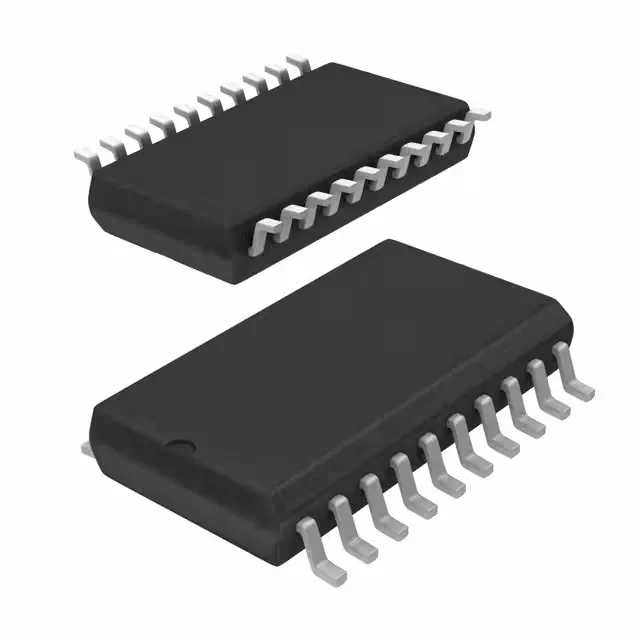
It runs at 16 MHz, carries 8 KB of Flash program memory, 1K x 8 of RAM, and 640 x 8 of EEPROM — a balanced memory map for cost-sensitive control applications like appliance interfaces, sensor nodes, and motor-control feedback loops. The 16 MHz clock speed defines the instruction throughput for the BOM: at this rate the core executes most instructions in one or two clock cycles, giving a practical MIPS range that handles UART polling, PWM generation, and ADC reads without external timing components. The internal oscillator eliminates the crystal and its load caps from the BOM, saving board area and cost. The 8 KB Flash is the firmware budget — enough for a bootloader plus a moderate control loop, but tight if you need a full protocol stack. The 640-byte EEPROM holds calibration constants or configuration data across power cycles without wearing the Flash. The 1K x 8 RAM supports a few frame buffers or a modest call stack; designs with large lookup tables should budget external serial RAM.
Peripherals and connectivity — what is on chip
The 5-channel 10-bit ADC reads analog sensors or potentiometers directly, eliminating an external converter. The 16 I/O lines in the 20-SOIC package are the practical limit for a small control board — enough for a few buttons, LEDs, a serial interface, and a PWM output.