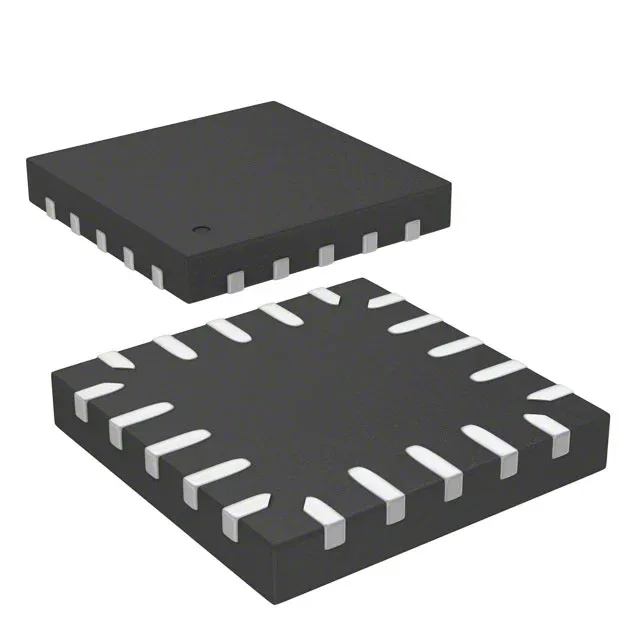
8-bit MCU for low-power sensor and control nodes
The 20-UFQFPN package (3x3 mm) fits space-constrained boards in portable instruments, battery monitors, and simple control loops.
At 16 MHz the STM8 core executes most instructions in one or two clock cycles, giving a useful throughput for polling sensors, driving PWM outputs, or handling low-speed serial protocols. For a UART at 115200 baud the CPU has plenty of headroom; for bit-banged SPI above 1 MHz you will want to use the hardware SPI peripheral directly.
On-chip memory: Flash, RAM, and EEPROM
With 8 KB of Flash and 1.5 KB of RAM, this MCU is sized for firmware that fits in a few thousand lines of C — think a thermostat controller, a simple data logger, or a key fob. The 2 KB of EEPROM is a standout: you can store calibration constants, configuration settings, or usage counters without external memory. The EEPROM endurance (typically 300k cycles per byte) supports frequent updates, like a run-time counter or a wear-leveled parameter block.
It will handle outdoor telecom enclosures, factory-floor sensor nodes, and engine-bay-adjacent electronics (as long as the ambient stays below 85°C). The 20-UFQFPN package is a 3x3 mm quad-flat no-lead — fine for reflow assembly, but the tiny pads mean a good solder-paste stencil is essential for hand rework.
ST lists the STM8L101F3U6ATR as Active.