16 MHz core, 4 KB Flash, 1.5 KB SRAM — sizing the firmware budget
The STM8L101F2U6ATR: This is an 8-bit STM8 core MCU clocked at 16 MHz, with 4 KB of on-chip Flash program memory and 1.5 KB of SRAM. The SRAM limits runtime data buffers to about 1.5 KB, so avoid large lookup tables or deep FIFOs without external memory. For applications that need more headroom, the STM8L family offers higher-density Flash options in the same package footprint.
The low-voltage threshold is useful for energy-harvesting designs or coin-cell-powered wearables where every millivolt of headroom extends run time. At the top end, it is compatible with 3.6 V Li-SOCl2 primary cells common in industrial wireless nodes.
The 85°C ceiling is typical for industrial-grade silicon; if your design sees sustained junction temperatures above 85°C, consider the extended-temperature variants in the STM8L family.
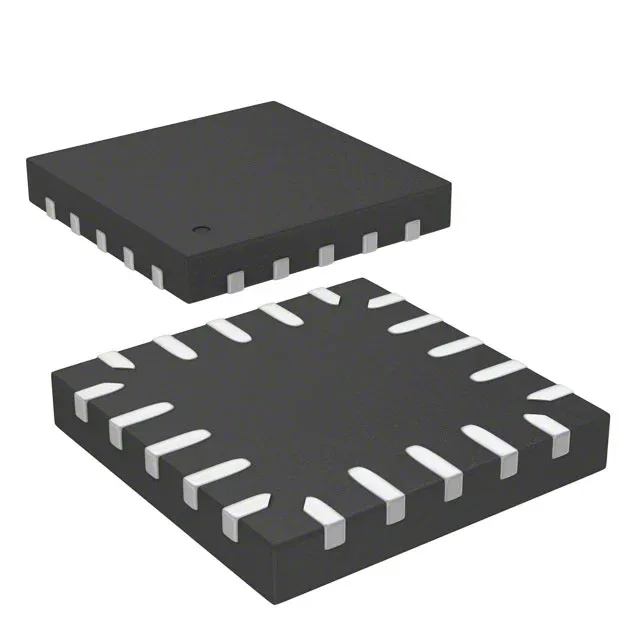
20-UFQFPN 3x3 mm — compact footprint for space-constrained boards
Housed in a 20-lead UFQFPN package measuring 3x3 mm, this MCU is sized for compact PCBs in portable or wearable products. The package is surface-mount only; hand-prototyping may require a hot-air station or pre-heated reflow profile. The tape-and-reel variant (the 'TR' suffix) is the ordering code for automated pick-and-place assembly.
Peripherals and connectivity — I²C, SPI, UART, PWM, WDT
An infrared (IR) peripheral is also listed, which can drive consumer IR remote-control protocols. With 18 general-purpose I/O pins, there is enough flexibility to interface with a small keypad, a few LEDs, and a serial sensor bus without external GPIO expanders.