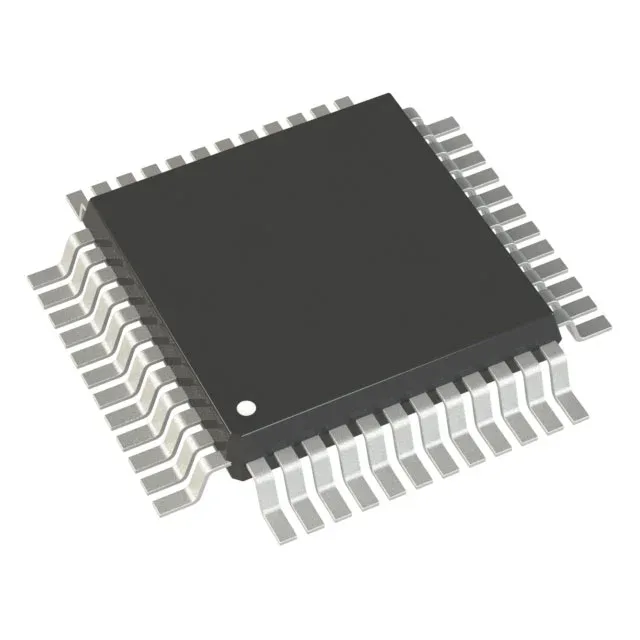
What this 8-bit MCU brings to an automotive ECU
That combination is the baseline for under-hood and engine-adjacent modules — body control, LIN-based actuator nodes, seat or mirror position controllers — where the silicon sees both cold cranking and under-hood soak-back. The 28 available I/O pins, along with I²C, LINbus, SPI, and UART/USART peripherals, give enough connectivity for a mixed-sensor and actuator cluster without needing an external CAN transceiver on every node.
Memory sizing for real firmware
8 KB of Flash is enough for a dedicated control loop with a LIN stack and a few hundred lines of application code. The 640-byte EEPROM block is separate from Flash, so calibration tables, fault counters, and production trim values can be updated byte-by-byte without erasing a whole sector. The 1 KB SRAM is tight for buffering — a 256-byte UART FIFO plus a few frame buffers for SPI sensor reads will use most of it. Plan the stack and global variables early in the firmware layout.