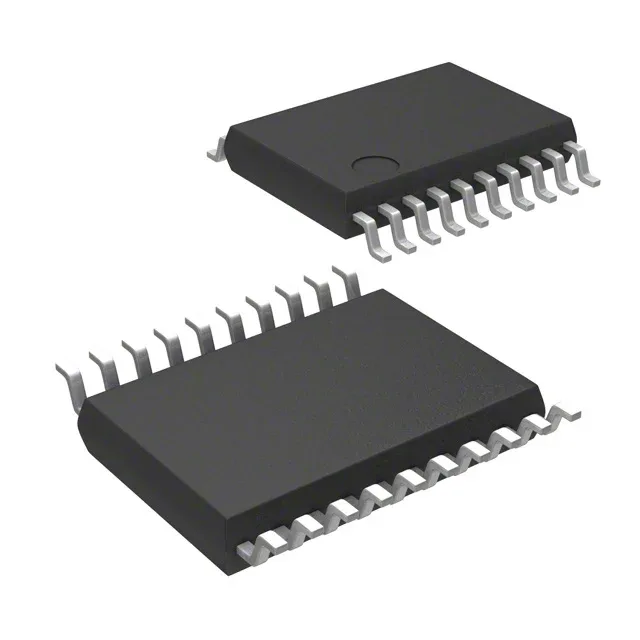
Automotive 8-bit MCU with LINbus — 16 MHz, 8 KB Flash, 150°C capable
The part is built for the 150°C junction-temperature environment typical of under-hood automotive modules. The 10-bit ADC with five channels handles analog inputs from potentiometers, thermistors, or pressure sensors.
This means STMicroelectronics will continue to supply the part for existing production programs, but it should not be selected for a new BOM. For a production line already qualified on this MCU, the NRND status means you have time to secure inventory, but the clock is running. For a new design, the correct move is to choose a current-production STM8A or STM8L part with a similar peripheral set and pinout — ST's automotive 8-bit roadmap continues with the STM8AF series, but verify the specific order code against the latest product selector.
150°C operating temperature — the defining spec
The -40°C to 150°C operating temperature range is the headline rating that justifies the automotive AEC-Q100 qualification. Most commercial 8-bit MCUs top out at 85°C or 105°C; the 150°C rating means this part can sit on a hot engine bay wall or inside a transmission controller without derating. If your application stays below 105°C, a commercial-grade STM8S part could save cost, but for 125°C+ environments this is the correct tier.
Memory budget — 8 KB Flash, 1 KB RAM, 640 B EEPROM
With 8 KB of program Flash and 1 KB of RAM, firmware must be lean. The 640 bytes of EEPROM (separate from Flash) is a genuine advantage for storing calibration constants, VIN, or fault codes without wearing out the program memory. A typical LIN slave node running a state machine, ADC sampling, and LIN 2.x stack fits in this footprint, but a CAN gateway or complex PID loop will overflow. Verify code size before committing.
Sourcing posture — quoted to order
The STM8AF6223PDX is available to source through independent distribution. Because of the NRND status, availability and pricing vary with date-code and quantity.