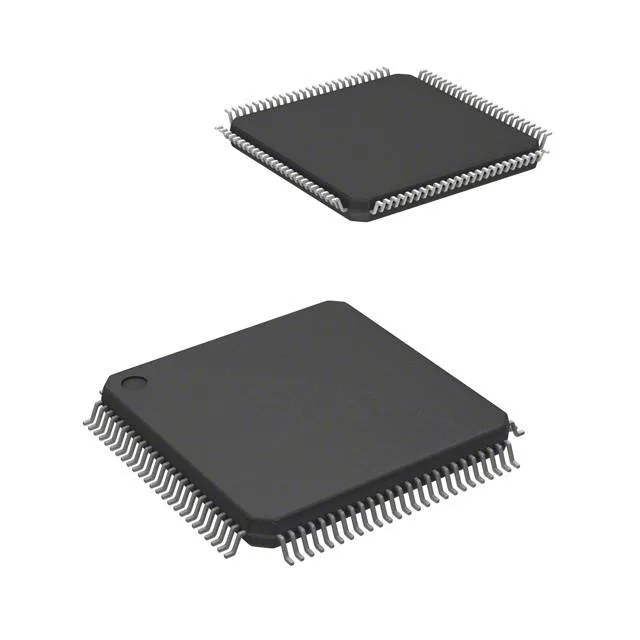
STMicroelectronics STM32L4R9VGT6 — Microcontrollers & Processors (MCU / MPU / DSP)

STM32L4R9VGT6 ARM Cortex-M4 MCU, 120 MHz, 1 MB Flash

MPNSTM32L4R9VGT6
Active

STMicroelectronics STM32L4R9VGT6, ARM Cortex-M4 32-bit MCU, 120 MHz, 1 MB Flash, 640 KB SRAM, 100-LQFP, -40°C to 85°C, active lifecycle.

$18.5500Ref. price · indicative, final on quote
StockContact for availability
MOQ1 pcs
  • 100% new & originalTraceable channels only — no refurbs, no pulls, no remarked parts.
  • Date & lot codes on quoteStated per line before you commit; label photos on request.
  • MSL-compliant ESD packingMoisture-sealed bags with indicator cards; reels photo-verified.
  • PayPal buyer protectionPay by T/T, PayPal or Payoneer — card payments covered end to end.

Specifications

STM32L4R9VGT6 Technical Specifications
ParameterValue
SeriesSTM32L4R
Mounting typeSurface Mount
Oscillator typeInternal
Program memory typeFLASH
Voltage - supply (Vcc (Vdd))1.71V ~ 3.6V
Operating temperature-40°C~85°C(TA)
Speed120MHz
PackageTray
RAM size640K x 8
Core size32-Bit Single-Core
PeripheralsBrown-out Detect/Reset, DMA, LCD, POR, PWM, WDT
ConnectivityCANbus, EBI/EMI, I²C, IrDA, LINbus, MMC/SD, SAI, SPI, UART/USART, USB OTG
Number of i (O)77
Core processorARM® Cortex®-M4
Case100-LQFP
Data convertersA/D 14x12b; D/A 2x12b
Program memory size1MB (1M x 8)

Product details

What the STM32L4R9VGT6 brings to a display-oriented embedded design

The STM32L4R9VGT6 is built around an ARM Cortex-M4 core with single-precision FPU clocked at 120 MHz. It has 1 MB of Flash and 640 KB of SRAM.

120 MHz Cortex-M4 — processing headroom for graphics and signal chains

The 120 MHz core speed is the top of the L4 range, roughly double the 80 MHz of the STM32L4x5/L4x6 parts. That matters when you are running a GUI library with Chrom-ART graphics acceleration, doing real-time FFTs on sensor data, or handling audio streams through the SAI peripheral. The FPU handles single-precision math natively, so a PID loop or a Kalman filter runs in a fraction of the cycles a software-emulated float library would take. At this clock the Flash needs zero wait states for linear code up to around 40 MHz; beyond that the prefetch buffer and ART Accelerator keep the pipeline fed without stalling.

1 MB Flash and 640 KB SRAM — sizing the firmware and data budget

The 1 MB Flash is generous for a low-power MCU — enough for a full graphics stack, a real-time OS kernel, and application code with room left over for OTA update staging. The 640 KB SRAM is the real differentiator: it splits into 192 KB of main SRAM, 384 KB of SRAM2 (accessible by both CPU and DMA), and a 64 KB dedicated SRAM for the LCD controller. That means a 480x272 pixel display with 16-bit colour fits entirely in the LCD SRAM, leaving the main SRAM free for stack, heap, and data buffers. No external memory needed for many display applications, which saves board space and BOM cost.

For a procurement decision this is the cleanest category: you can qualify it for a new design without planning an obsolescence migration.

Frequently asked questions

What is the difference between STM32L4R9VGT6 and STM32L4R9VGT6TR?

The two order codes share the same silicon and package — the STM32L4R9VGT6TR suffix indicates Tape & Reel packaging for automated assembly, while the base STM32L4R9VGT6 ships in trays. Functionally and pin-compatibly they are identical.

What is the closest pin-compatible alternative in the STM32L4R family?

Within the same 100-pin LQFP footprint, the STM32L4R5VGT6 offers a lower memory tier (1 MB Flash, 320 KB SRAM) and no TFT-LCD controller. The STM32L4R9VGT6 is the fully loaded variant with the largest SRAM and display peripheral set. All share the same pinout, so a drop-in migration is possible if the application can tolerate fewer resources.