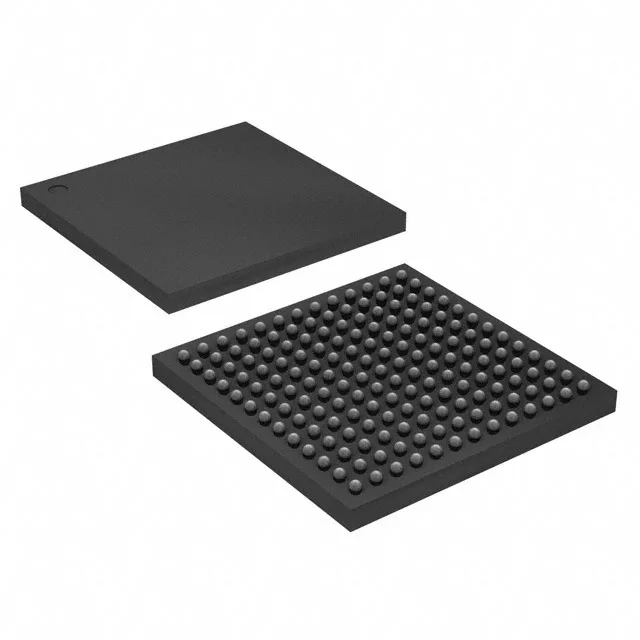
The part integrates a full set of peripherals: CAN, USB OTG, EBI/EMI for external memory or displays, multiple SPI/I2C/SAI audio interfaces, and dual 12-bit DACs plus a 16-channel 12-bit ADC. It is designed for low-power sensor fusion, GUI-driven control panels, and industrial IoT gateways where you need the M4 DSP/FPU throughput without the power budget of a high-performance part.
Memory and I/O — sizing the firmware and the bus
The 2 MB Flash is enough for a full GUI stack with a real-time OS and sensor-processing library; the 640 KB SRAM leaves headroom for double-buffered frame buffers or large data logs. 112 I/Os in a 169-ball BGA means high pinout utilization — you get parallel bus access plus many GPIOs for sensor interrupts and control lines. The EBI/EMI interface can drive external SRAM, NOR Flash, or a parallel LCD controller without bit-banging.
This is not a hand-solder part; it requires a controlled reflow profile, X-ray inspection for voids and shorts, and a stencil designed for the ball array. MSL is typically 3 for this package family (verify on the reel label). The small footprint saves board space but demands a multi-layer PCB with via-in-pad or microvias for fan-out.
Peripheral mix and integration note
The connectivity set (CAN, USB OTG, EBI/EMI, SAI, multiple SPI/I2C) covers industrial fieldbus, audio codec interfaces, and external memory expansion. The internal oscillator eliminates a separate crystal for the main clock, though the RTC still needs an external 32.768 kHz crystal for accurate timekeeping.