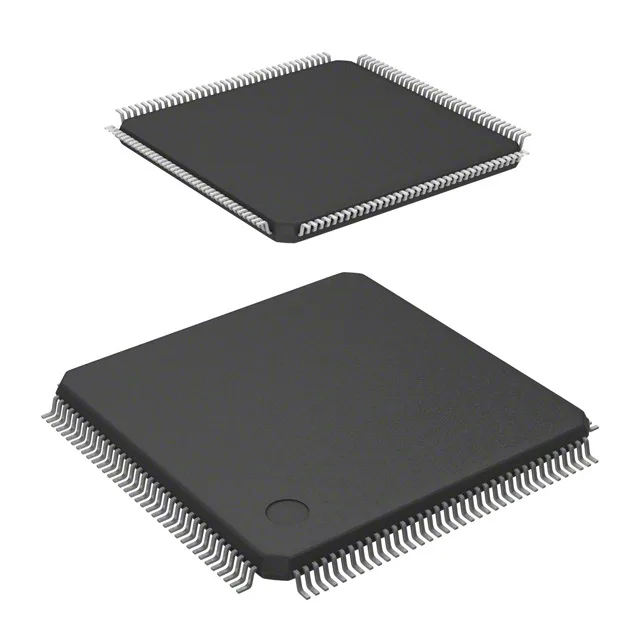
STMicroelectronics STM32L4P5ZGT6 — Microcontrollers & Processors (MCU / MPU / DSP)

STM32L4P5ZGT6 STM32L4 ARM Cortex-M4 MCU, 120 MHz, 1 MB Flash

MPNSTM32L4P5ZGT6
Active

ST STM32L4 series, ARM Cortex-M4, 32-Bit Single-Core, 120 MHz, 1MB (1M x 8) FLASH, 320K x 8 RAM, 115 I/O, 144-LQFP, -40°C~85°C (TA).

$17.1500Ref. price · indicative, final on quote
Packaging144-LQFP
SeriesSTM32L4
Independent supplier — new & surplus stockAuthenticity-screened · ESD-safe packingListing updated Aug 2026

Specifications

STM32L4P5ZGT6 specifications
ParameterValue
SeriesSTM32L4
MountingSurface Mount
Oscillator typeInternal
Program memory typeFLASH
Voltage - supply (Vcc (Vdd))1.71V ~ 3.6V
Operating temperature-40°C~85°C(TA)
Speed120MHz
PackageTray
RAM size320K x 8
Core size32-Bit Single-Core
PeripheralsBrown-out Detect/Reset, DMA, LCD, POR, PWM, WDT
ConnectivityCANbus, EBI/EMI, I²C, IrDA, LINbus, MMC/SD, SAI, SPI, UART/USART, USB OTG
Number of i (O)115
Core processorARM® Cortex®-M4
Case144-LQFP
Data convertersA/D 16x12b; D/A 2x12b
Program memory size1MB (1M x 8)

Product details

120 MHz Cortex-M4 with 1 MB Flash — what it buys you

The STM32L4P5ZGT6: Cortex-M4 core at 120 MHz with DSP and FPU.

Memory headroom and the 320 KB SRAM decision

The 320 KB SRAM is a real differentiator versus the 48–80 KB you'd get on the STM32L1 series. That extra RAM lets you hold a full display frame buffer, run a real-time operating system with multiple stacks, or stage a firmware-over-the-air image before committing it to Flash. If your design uses the external memory interface (EBI/EMI) for a parallel LCD or an SRAM expansion, the internal RAM still handles the time-critical scratchpad. The 1 MB Flash is sized for complex application code plus a bootloader and a fallback image — no need to compress or bank-switch unless you're logging large datasets internally.

Supply range and power rail flexibility

That simplifies the power tree in battery-powered instruments and portable medical devices.

The 144-LQFP (20x20 mm) is a hand-solderable, inspectable package — no BGA rework station needed, which matters for prototyping and low-volume production. The 115 I/O are all brought out to the perimeter, so layout is straightforward even with a four-layer board.

Frequently asked questions

How does STM32L4P5ZGT6 compare to the STM32L151CBU6A?

The STM32L151CBU6A runs a Cortex-M3 at 32 MHz with smaller memory and fewer I/O — it's a lower-cost, lower-power option for simpler tasks. The STM32L4P5ZGT6 delivers roughly 4x the core speed (120 MHz vs 32 MHz), much more Flash and RAM (1 MB vs 128 KB Flash, 320 KB vs 32 KB RAM), and a wider supply range (1.71–3.6 V vs fixed 1.8 V). The L4 part also adds USB OTG, SAI, and an external bus interface. If your application needs DSP performance, a display, or USB connectivity, the L4 is the right choice; if you're running a simple sensor node on a coin cell, the may be sufficient.