80 MHz Cortex-M4 with FPU — what it buys for the control loop
That 80 MHz figure is the headline number, but the real value is the DSP instruction set and floating-point unit — it handles FFTs, motor-control observers, and sensor fusion loops without a separate DSP or co-processor.
Peripheral set — USB, CAN, and QSPI on one die
This part carries a USB 2.0 full-speed controller (device or OTG), a CAN 2.0B interface, and a Quad-SPI memory-mapped interface alongside the usual I²C, SPI, and UART blocks. The QSPI is the one to note: it lets you memory-map an external serial NOR Flash for code execution or data logging, effectively expanding the 512 KB internal Flash without chewing up GPIO for a parallel bus. The 16-channel 12-bit ADC and single 12-bit DAC cover analog front-end needs for current sensing or analog output loops.
Supply range and power — designed for a battery rail
The STM32L4 family is ST's ultra-low-power line; the L462REI6 variant includes multiple stop and standby modes with sub-µA wakeup capability, though the exact current figures depend on the clock configuration and which peripherals are kept alive. For a battery-powered sensor node or a handheld instrument, this is the right MCU tier.
Package and temperature — industrial fit in a 5x5 mm BGA
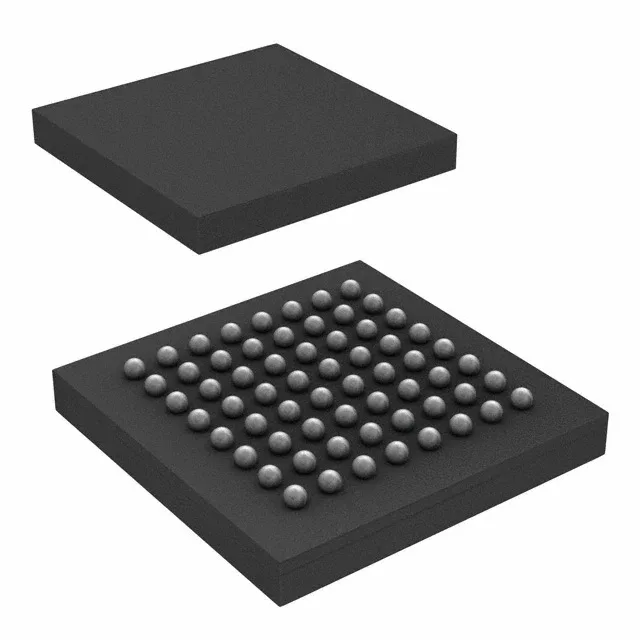
Housed in a 64-ball UFBGA measuring 5x5 mm, this is a compact BGA that routes well on a four-layer board with microvias. The 52 I/O count in that small footprint is dense — plan for via-in-pad or at least a 0.5 mm pitch design rule.
The STM32L4 series is a current mainstream portfolio at ST, so PCN activity is limited to die shrinks and package-site changes — the usual watch items but nothing that forces a redesign.