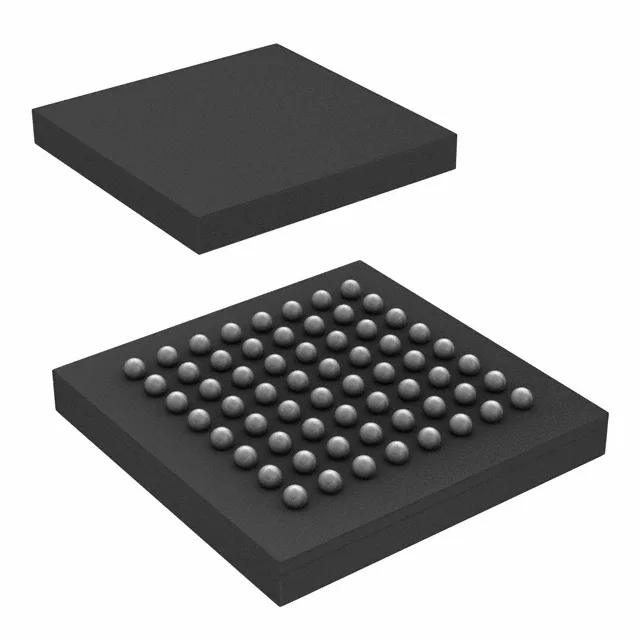
The STM32L452RCI6: It packs 256 KB of Flash and 160 KB of SRAM, which is enough headroom for sensor fusion, motor-control loops, or a modest GUI without external memory. The 64-UFBGA (5x5 mm) package saves board area but demands a controlled BGA assembly process — not a hand-solder part.
The ARM Cortex-M4 core with FPU at 80 MHz handles single-cycle MAC operations and floating-point math without software emulation. That matters for real-time control loops — think field-oriented motor control or digital PSU compensation — where a fixed-point M3 would need more cycles. The SWD debug port stays alive even with the watchdog armed, so bring-up doesn't stall on a locked device.
Memory and peripheral mix for the system architect
256 KB Flash and 160 KB SRAM place this MCU in the mid-range of the STM32L4 family. The SRAM is generous enough to hold a double frame buffer for a small TFT or a large audio buffer. Connectivity covers CANbus, I²C, SPI, UART/USART, USB, and QSPI — the QSPI interface lets you map an external serial Flash or PSRAM into the memory space for data logging or OTA staging. The 16-channel 12-bit ADC and single 12-bit DAC handle analog sensor inputs and one analog output.
Package and PCB layout reality
The 64-UFBGA (5x5 mm) is a 0.5 mm pitch BGA. The small ball diameter and tight pitch mean the PCB needs micro-vias or via-in-pad for breakout, and the assembly house must be comfortable with fine-pitch BGA reflow. X-ray inspection is non-negotiable after reflow.
It is ROHS3 compliant. The base product number is STM32L452, and the series is STM32L4.