80 MHz is the sweet spot in the STM32L4 line: fast enough to run a DSP filter or a FFT on live sensor data without an external accelerator, yet the dynamic current stays low enough that a 250 mAh coin cell can sustain intermittent operation for months. The Cortex-M4 core with single-precision FPU handles the math that would stall an M0+ or an M3, so if your algorithm involves PID loops, motor observers, or audio processing, this core saves you a separate DSP chip. The 160 KB SRAM is split across multiple banks with parity on the main SRAM, which simplifies safety-oriented firmware — a single-bit upset gets caught without a full ECC engine. The 256 KB Flash supports dual-bank operation, so you can do over-the-air updates by writing one bank while executing from the other.
Connectivity and analog — what is on the die
The 52 I/Os in the 64-WLCSP package are enough to drive a parallel LCD and a keypad matrix while leaving serial buses free.
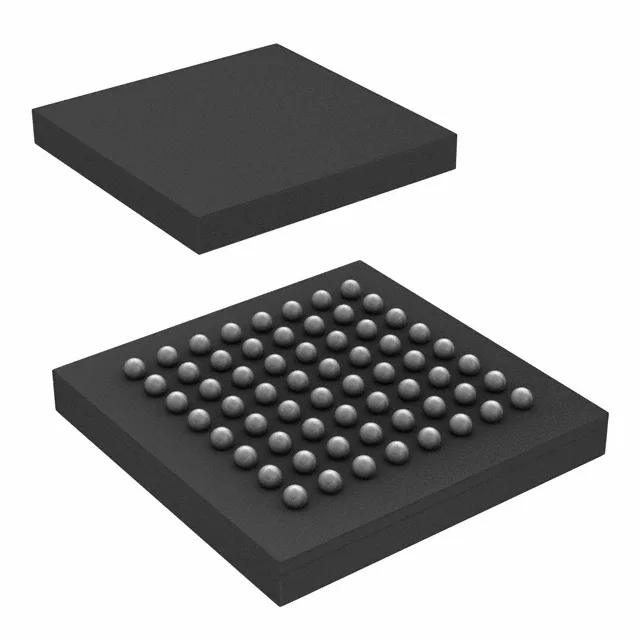
Package and assembly — the WLCSP footprint
It saves board area versus a 64-pin LQFP, but it requires a controlled SMT process — the balls are small, and the board needs a solder-mask-defined pad with a via-in-pad layout if you route all 52 I/Os. This is a package for production volumes where every square millimetre matters; for prototyping or rework, the LQFP-64 variant (STM32L451RCT6) is easier to hand-solder.
For a BOM line, this means no last-time-buy risk and full factory support for new designs.