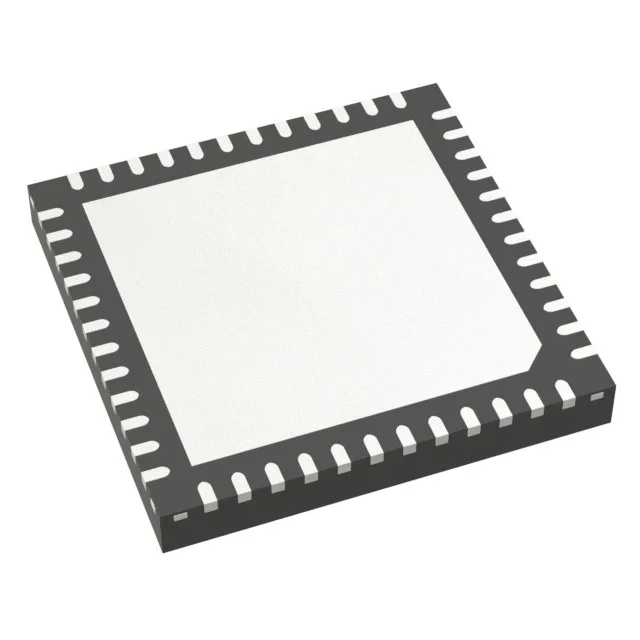
The STM32L443CCU6: On-chip peripherals include a 12-bit ADC (10 channels), a 12-bit DAC (2 channels), CAN, multiple I²C/SPI/UART interfaces, QSPI, and an LCD driver — enough to handle sensor fusion, motor control, or a local HMI without adding external analog or communication ICs.
80 MHz vs 32 MHz — why the core speed matters
Compared to the STM32L151CBU6A, which runs a Cortex-M3 at 32 MHz, this part more than doubles the clock rate with a Cortex-M4 core that includes a single-cycle multiply and hardware FPU. For control loops, FFTs, or audio processing, the M4's DSP extensions and floating-point unit cut cycle counts significantly.
Package and supply — footprint and rail planning
The 1.71 V minimum supply means a single Li-ion cell or two alkaline cells can power the MCU directly — no boost converter needed. The 38 GPIOs are enough for a keypad, small TFT, or sensor array without port expansion.