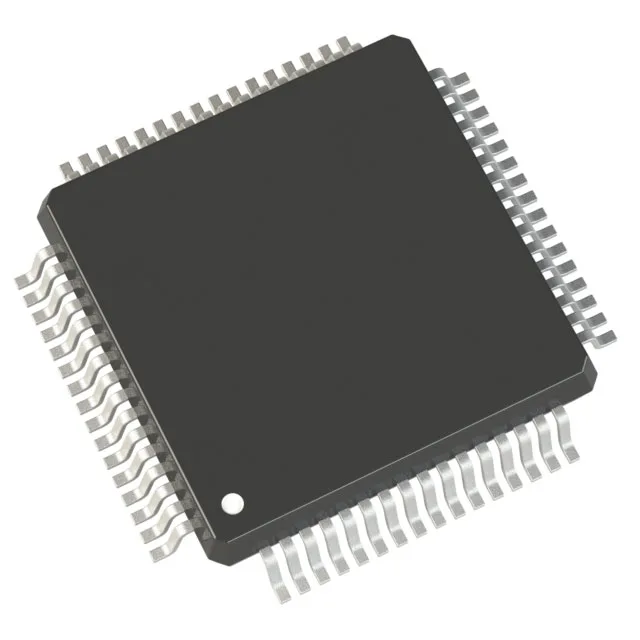
STMicroelectronics STM32L433RBT6 — Microcontrollers & Processors (MCU / MPU / DSP)

STM32L433RBT6 STM32L4 MCU, 80MHz Cortex-M4, 128KB Flash

MPNSTM32L433RBT6
Active

STMicroelectronics STM32L4 series STM32L433RBT6, ARM Cortex-M4 32-Bit MCU, 80MHz, 128KB Flash, 64K x 8 SRAM, 1.71V-3.6V, -40°C to 85°C, 64-LQFP (10x10), 52 I/O.

$6.4800Ref. price · indicative, final on quote
Packaging64-LQFP
RoHSROHS3 Compliant
SeriesSTM32L4
Independent supplier — new & surplus stockAuthenticity-screened · ESD-safe packingListing updated Aug 2026

Specifications

STM32L433RBT6 specifications
ParameterValue
SeriesSTM32L4
MountingSurface Mount
Oscillator typeInternal
Program memory typeFLASH
Voltage - supply (Vcc (Vdd))1.71V ~ 3.6V
Operating temperature-40°C ~ 85°C (TA)
Speed80MHz
PackageTray
RAM size64K x 8
Core size32-Bit Single-Core
PeripheralsBrown-out Detect/Reset, DMA, LCD, PWM, WDT
ConnectivityCANbus, I²C, IrDA, LINbus, MMC/SD, QSPI, SAI, SPI, SWPMI, UART/USART, USB
Number of i (O)52
Core processorARM® Cortex®-M4
Case64-LQFP
Data convertersA/D 16x12b; D/A 2x12b
Program memory size128KB (128K x 8)

Product details

80 MHz Cortex-M4 with FPU — where it lands in the STM32L4 lineup

The 64-LQFP package gives you 52 I/O, a 16-channel 12-bit ADC, and a 2-channel 12-bit DAC — enough analog front-end for sensor-conditioning loops without an external converter.

128 KB Flash / 64 KB SRAM — sizing the firmware budget

The 128 KB Flash is the mid-density option in the STM32L433 family — enough for a moderate-complexity application stack (RTOS, USB stack, CANopen, sensor fusion library) without stepping up to the 256 KB or 512 KB variants. The 64 KB SRAM gives headroom for double-buffered display frames or a modest heap for dynamic allocation. If your firmware image is already pushing 100 KB, the STM32L433RCT6 (256 KB Flash) is the same footprint and pinout.

Connectivity and peripheral set — what the 52 I/O unlocks

The peripheral list includes CANbus, multiple I²C and SPI interfaces, a Quad-SPI for external Flash, SAI for audio, USB, and an LCD driver. The 52 I/O in the 64-LQFP package leave enough pins for a parallel LCD data bus, external memory chip selects, and a handful of sensor interrupts — you won't be multiplexing aggressively unless you need more than a dozen GPIOs for buttons and LEDs.

ST lists the STM32L433RBT6 as Active. For a production program that expects to run another three to five years, this part doesn't carry obsolescence risk. The ROHS3 compliance covers current EU and most global RoHS requirements without an exemption expiry to track.

Frequently asked questions

Is STM32L433RBT6 equivalent to STM32L433RCT6?

The STM32L433RBT6 and STM32L433RCT6 share the same package (64-LQFP), core, supply range, and temperature grade. The difference is Flash density: the RBT6 has 128 KB, the RCT6 has 256 KB. They are pin-compatible, so a board designed for one can accept the other with a firmware update.

Can STM32L433RBT6 replace STM32L433RBT7?

If your application's ambient temperature stays below 85°C, the RBT6 is a direct functional replacement — same Flash, SRAM, package, and pinout. For environments above 85°C, the RBT7 is required.