The 80 MHz core with single-precision FPU handles real-time math like FFT or sensor fusion without a separate DSP. Compare this to the older STM32L151CBU6A, which runs a Cortex-M3 at 32 MHz — the STM32L422RBT6 gives you over 2× the clock speed and hardware floating-point, so algorithm-heavy loops finish sooner and the core can spend more time in sleep mode. The 40K x 8 SRAM is enough for a FreeRTOS heap with a few moderate buffers; if you need more, the Quad SPI interface can memory-map an external PSRAM or serial Flash.
Active lifecycle — no LTB scramble needed
The STM32L4 series has broad second-source and roadmap continuity within the family, so if you later need more memory or a smaller package, pin-compatible siblings exist.
Package and layout — 64-LQFP, no hidden surprises
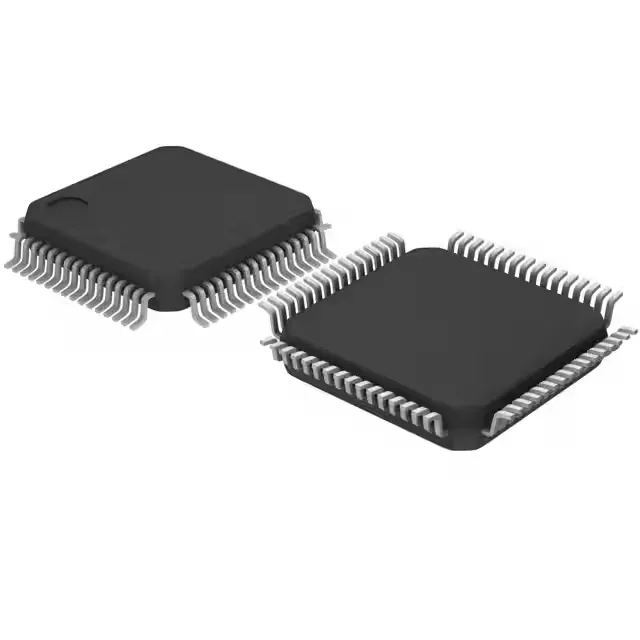
The 64-LQFP (10×10 mm) is a common, hand-solderable footprint. The supplier device package is 64-LQFP (10x10). Surface-mount only. No exposed pad underneath, so you don't need thermal vias — just standard 0.5 mm pitch layout. Decouple the VDD pins with 100 nF ceramics close to each pair; a single 4.7 µF bulk cap per supply rail is enough for most designs.