80 MHz Cortex-M4 with 128 KB Flash — the low-power workhorse
It is built for energy-sensitive designs that still need the DSP extensions and single-precision FPU of the M4 core — think battery-powered sensor nodes, portable medical devices, and industrial wireless gateways where every microamp in sleep mode counts.
Industrial temperature grade and compact BGA footprint
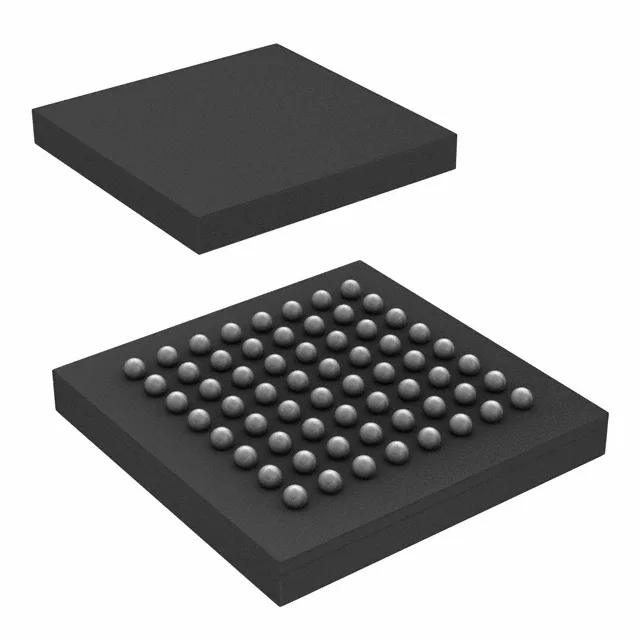
The 64-UFBGA package measures 5x5 mm — a dense ball grid array that keeps the PCB footprint small but requires careful fanout and a controlled impedance stackup if you route the Quad SPI or USB signals. The 52 available I/O pins give enough headroom for a parallel display interface, external memory bus, or a bank of sensor interrupts alongside the usual UART, I2C, and SPI peripherals.
Peripheral set and connectivity for mixed-signal designs
The connectivity block covers I2C, SPI, Quad SPI, UART/USART, LIN, IrDA, and USB, so it can talk to external Flash, radio modules, and sensor hubs without glue logic. The 16-channel 12-bit ADC handles analog inputs from thermistors, current shunts, or bridge sensors, which is typical for the STM32L4's target role as a mixed-signal host in field instrumentation.
Active lifecycle — no obsolescence pressure on new designs
For supply resilience, the base product number STM32L412 covers multiple Flash and package variants across the STM32L4 series, which gives you pin-compatible density options if the firmware grows beyond 128 KB.