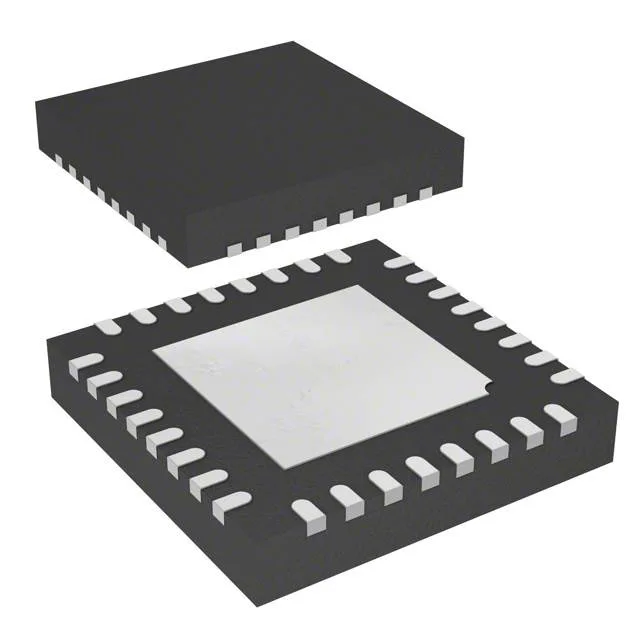
STM32L412K8U6 – 80 MHz Cortex-M4 in a compact 5x5 mm package
It targets battery-operated instrumentation, sensor hubs, and industrial control where the balance of processing throughput and sub-µA stop-mode current matters.
64 KB Flash, 40 KB RAM – firmware headroom check
64 KB Flash is the program memory budget. If you are bringing up a FreeRTOS application with a USB stack and a modest sensor-fusion library, that fits comfortably. The 40 KB SRAM is generous for this density tier — enough for a 320x240 frame buffer (grayscale) or a moderate heap for dynamic allocation. The flash is single-banked, so read-while-write is not supported; plan your EEPROM-emulation writes accordingly.
The ARM Cortex-M4 core includes a single-precision FPU and a DSP extension with single-cycle 16/32-bit MAC. At 80 MHz you get 100 DMIPS of headroom for real-time control loops, FFTs, or sensor fusion without breaking the power budget. The STM32L4 clock tree lets you run the core at 80 MHz while the peripherals tick at a lower frequency, saving dynamic current. Boot from internal flash with BOOT0 low; the PLL needs one flash wait state above 48 MHz — the reference manual covers the setup sequence.
I/O and peripheral mix – 26 pins, Quad SPI, USB
With 26 I/O pins in a 32-pin package, you get a useful peripheral set: Quad SPI for external flash or RAM, a full-speed USB device, three UARTs (one with ISO 7816 smart-card support), two SPIs (one with I2S), and two I2Cs. The 10-channel 12-bit ADC (1 Msps) covers analog inputs. Brown-out detect and a programmable voltage detector are on-chip, so an external supervisor is optional. The internal oscillator is factory-trimmed to 1% accuracy — adequate for UART and most non-CAN applications.