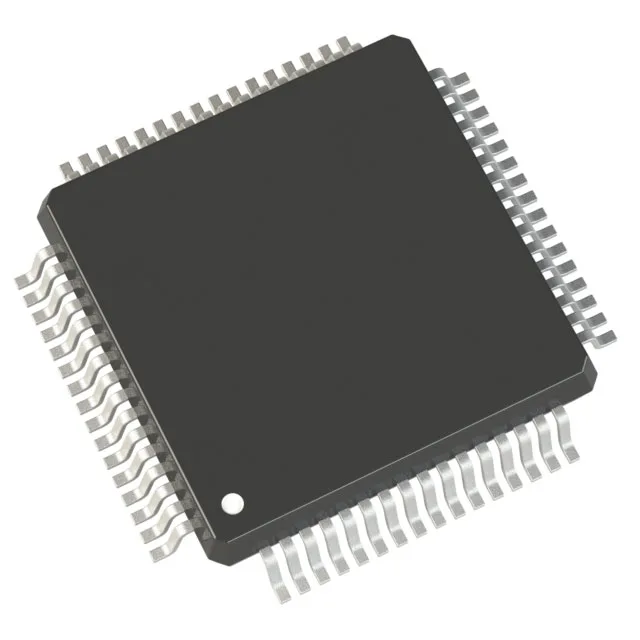
It runs at 32MHz and packs 128KB of Flash program memory, 20K x 8 of RAM, and a separate 6K x 8 EEPROM block for data that survives power loss without wearing the Flash. The supply range from 1.65V to 3.6V means it keeps running off a single alkaline cell down to near-empty, which is the main reason you see this part in battery-operated sensor nodes, LPWAN endpoints, and portable instrumentation.
The 125°C ceiling is the extended-temperature tier that commercial 85°C parts cannot touch — if your product sees engine-bay heat or direct sunlight in a sealed enclosure, this is the grade you need.
Memory layout — why the separate EEPROM matters
The 20KB RAM handles RTOS tasks and data buffers. What sets this part apart from many Cortex-M0+ MCUs is the dedicated 6K x 8 EEPROM: you can store calibration constants, node IDs, or logged readings without wearing out the Flash array or needing a page-erase cycle. For a battery-powered sensor that writes configuration data daily over a ten-year service life, that EEPROM block is the difference between a reliable field return and a premature failure.