32 MHz Cortex-M0+ — the right speed for battery-life, not benchmark bragging
It runs at 32 MHz, which is enough for sensor fusion, UART/I²C/SPI communication, and simple control loops without burning through a battery. The 128 KB Flash and 20 KB RAM (organized as 20K x 8) give you room for a modest application stack plus a small RTOS or bare-metal scheduler. The 6 KB EEPROM (6K x 8) is handy for storing calibration constants or configuration data without wearing out Flash sectors.
The 6 KB EEPROM lets you store parameters that survive a firmware update without external EEPROM. The 10-channel 12-bit ADC (A/D 10x12b) covers analog inputs like thermistors or current shunts. The DMA and PWM peripherals offload the core for time-critical tasks.
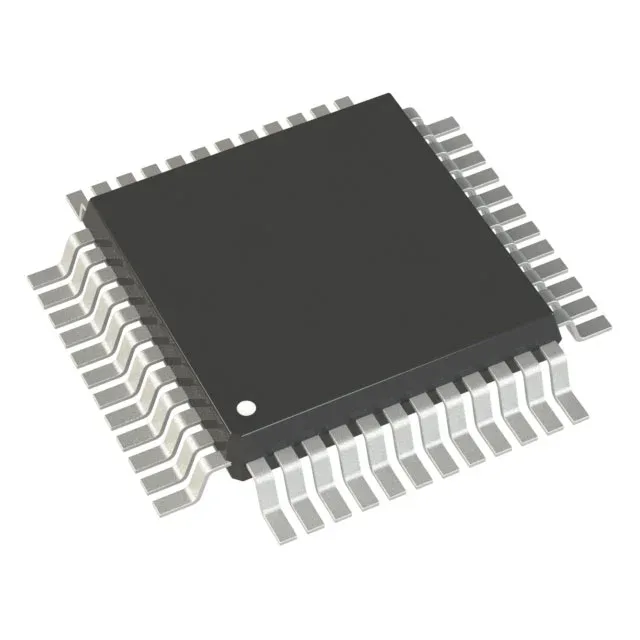
32-LQFP package — what the footprint tells you
Housed in a 32-LQFP package (7x7 mm body), the part gives you 25 I/O pins. That's enough for a small keypad, a character LCD, or a handful of sensor interrupts.
The base product number is STM32L071, so any future die shrinks or package variants will share the same family support.