Memory sizing for the BOM line
The 64 KB Flash is the first gate: it fits a FreeRTOS kernel plus a BLE stack (about 40 KB) with 20 KB left for application logic. The 8 KB RAM is the tighter constraint — buffer-heavy designs like audio capture or high-rate ADC logging will bump against it. The integrated 2 KB EEPROM saves the cost and board space of an external serial EEPROM for calibration coefficients or device configuration that survives a firmware update.
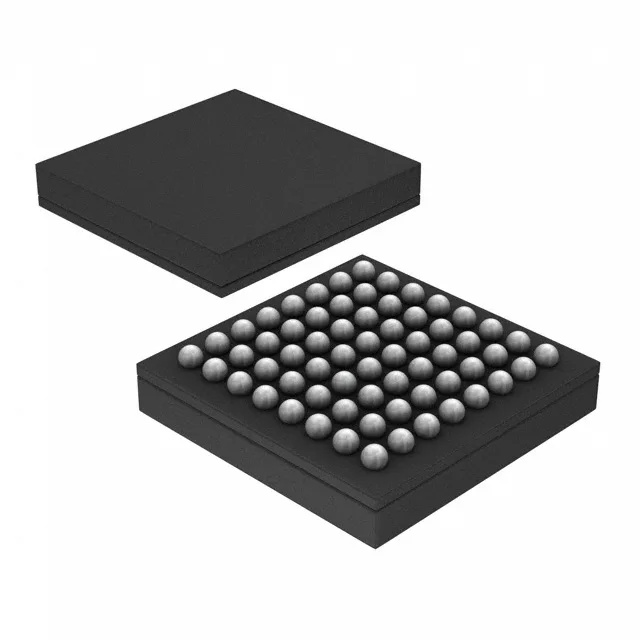
64-TFBGA — what the rework bench needs to know
The 64-TFBGA (5x5 mm) is a fine-pitch BGA with no exposed pad. Hot-air profile at 240°C peak, bottom preheat to 120°C, and a stencil that deposits enough paste volume to avoid head-in-pillow. This is not a hand-solder part; plan for a reflow oven or a professional BGA rework station.
Peripherals and connectivity for industrial IoT
The 16-channel 12-bit ADC covers multi-sensor acquisition.
Industrial temperature range and environment
The 105°C ceiling gives thermal margin above the usual 85°C industrial limit, which matters when the MCU sits near a power stage or in a sealed enclosure.
The base product number STM32L051 covers multiple Flash and package variants, so if a future BOM needs more memory or a different footprint, the migration path stays within the same family.