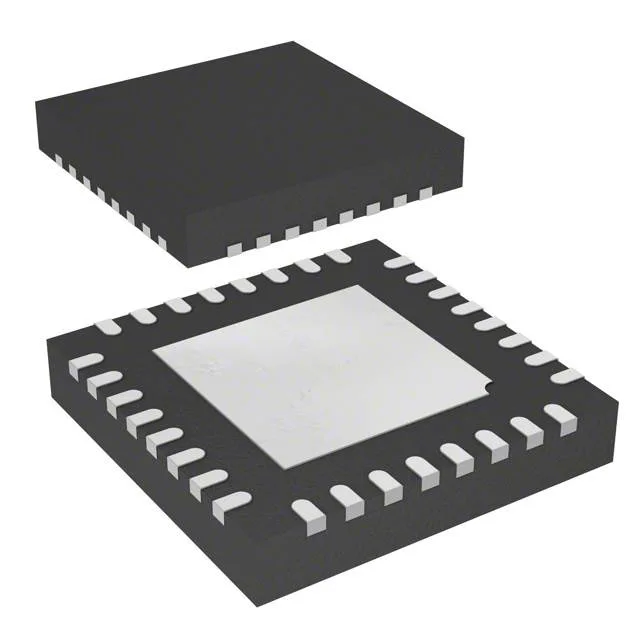
The STM32L051K6U6 is a 32-bit ARM Cortex-M0+ MCU from ST's STM32L0 ultra-low-power series, clocked at 32 MHz. It carries 32 KB of Flash program memory, 8 KB of SRAM, and 2 KB of embedded EEPROM — enough for a modest firmware image with non-volatile parameter storage, so you can skip an external serial EEPROM on the board. The 27 I/O lines and peripherals including I²C, SPI, UART/USART, IrDA, PWM, and a 10-channel 12-bit ADC make it a fit for sensor nodes, battery-powered instrumentation, and simple control loops in industrial or commercial environments rated -40°C to 85°C.
32 MHz — enough for sensor polling and light control
The 32 MHz core speed is modest by today's MCU standards, but that is the point: the STM32L0 family trades raw MHz for low active and sleep current. For a sensor that wakes every second, reads a temperature, and sends a byte over I²C, 32 MHz is plenty.
Memory budget: 32 KB Flash, 8 KB RAM, 2 KB EEPROM
The 2 KB EEPROM is a real advantage: you can store calibration constants or fault logs without wearing the Flash. 8 KB RAM limits buffering; plan your DMA and stack usage accordingly.