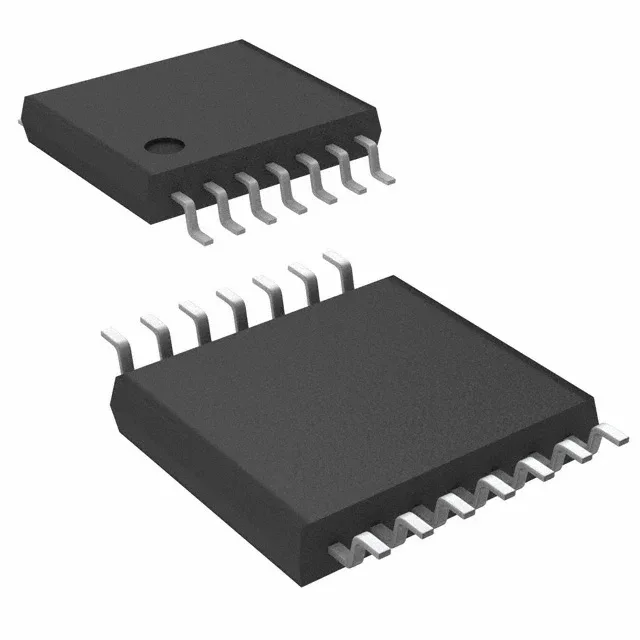
32 MHz Cortex-M0+ with 16 KB Flash — small-footprint, low-power MCU
The 14-TSSOP package (4.40 mm wide) with 11 I/O suits compact sensor nodes, handheld tools, and IoT edge devices where board area is tight.
The 1.65 V minimum supply is the key enabler for single-cell battery designs: a 1.5 V alkaline cell stays above the brown-out threshold through most of its discharge curve.
Memory and peripheral mix — what the 16 KB / 2 KB / 512 B budget buys
The 512 bytes of EEPROM are useful for storing calibration coefficients, node IDs, or configuration parameters without wearing the Flash. The 4-channel 12-bit ADC is enough for reading a thermistor, a potentiometer, or a current-sense resistor; for more channels you would step up to a larger STM32L0 variant.
For dual-sourcing resilience, the STM32L0 family includes pin-compatible siblings with different memory sizes — the same 14-TSSOP footprint — so a firmware-only migration is possible if the project needs more Flash or RAM later.