1.65 V minimum supply — battery-operated design fit
The 1.65 V minimum Vcc is the standout feature for energy-harvesting or single-cell battery applications. Many competing ultra-low-power MCUs require a minimum of 1.8 V or 2.0 V, which forces a boost converter or a second cell. Here, the MCU runs directly from a nearly depleted alkaline cell (nominal 1.5 V, end-of-life ~0.9 V) through a small boost stage, or from a LiFePO4 cell at 3.2 V. The 3.6 V maximum also covers 3.7 V Li-ion without a regulator, though a series diode may be needed for reverse-polarity protection.
16 KB Flash, 2 KB SRAM — firmware budget
With 16 KB of Flash and 2 KB of SRAM, this part targets small-footprint firmware: a bootloader, a Modbus or I²C sensor driver, a PID loop, and a few hundred bytes of state variables fit comfortably. The 512-byte EEPROM block is useful for calibration constants or configuration parameters that survive a firmware update.
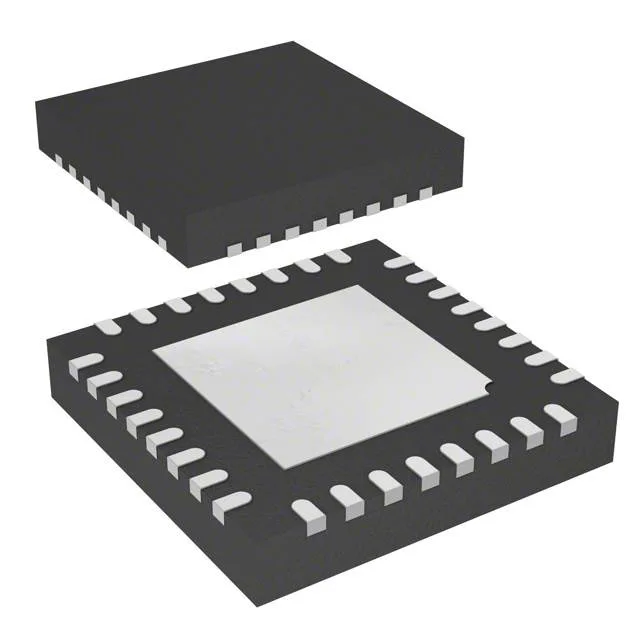
32-UFQFN exposed pad — layout and thermal management
The 28 I/O lines include up to 10 analog inputs (12-bit ADC), I²C, SPI, and UART interfaces, which cover most sensor-interfacing and low-speed communication needs.
The base product number STM32L011 covers multiple density and package variants, so a pin-compatible upgrade path exists within the family if firmware requirements grow.