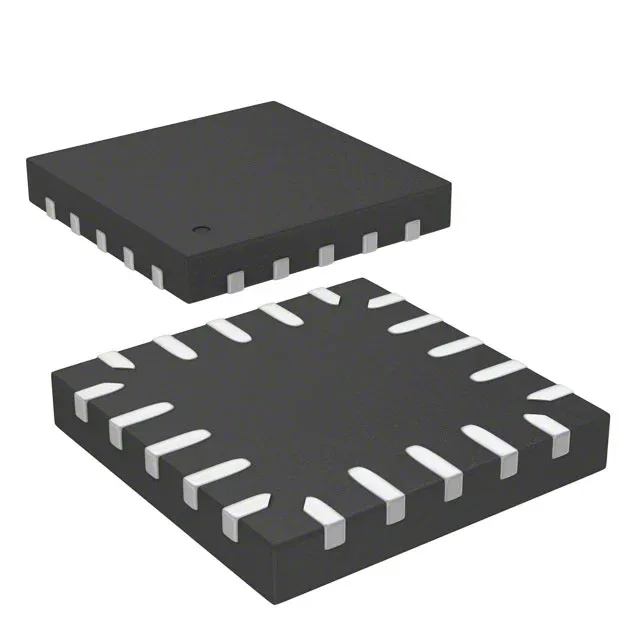
The STM32L011F4U6TR is an ultra-low-power 32-bit MCU from STMicroelectronics built around the ARM Cortex-M0+ core running at 32 MHz. This part targets battery-operated sensor endpoints, IoT nodes, portable medical monitors, and industrial data loggers where every microamp of sleep current and every square millimeter of PCB area matters.
16 KB Flash, 2 KB SRAM — sizing the firmware budget
The 16 KB Flash (16K x 8) is the hard ceiling for your application code. That is enough for a Bluetooth LE stack trimmed to a GATT server with a few characteristics, a Modbus RTU slave on the UART, or a simple PID loop with a few sensor reads. The 2 KB SRAM is the tighter constraint — if your application uses a large DMA buffer, a display frame buffer, or multiple protocol stacks, you will hit the wall. The 512 x 8 EEPROM is a genuine advantage over parts that emulate EEPROM in Flash: you can write individual bytes without erase cycles, and the endurance is separate from the Flash wear. For designs that log calibration data or fault counters, this avoids a wear-leveling scheme in software.
The 1.65 V minimum supply voltage lets this MCU run from a nearly depleted alkaline cell (nominal 1.5 V drops to ~1.0 V at end of life, but the part stays operational down to 1.65 V — you still need a boost converter below that). At the top end, 3.6 V covers a Li-ion battery fully charged at 4.2 V with a series diode drop, or a 3.3 V rail with headroom. The wide range simplifies power architecture in coin-cell or dual-AA designs. Brown-out detect and POR are integrated peripherals, so you do not need an external supervisor for reliable startup and shutdown.
If your design needs to survive a hot rooftop in summer or a freezer warehouse, this part fits without a commercial-to-industrial uprate.
I/O and connectivity — 16 pins, four serial interfaces
The 7-channel 12-bit ADC is enough for reading analog sensors like thermistors, potentiometers, or current-sense resistors. There is no DAC, no USB, no CAN — if you need those, the STM32L0 family has larger members, but for a simple sensor node the peripherals here cover the essentials without paying for unused silicon.
The ROHS3 compliance covers EU and global regulatory requirements for lead-free assembly.