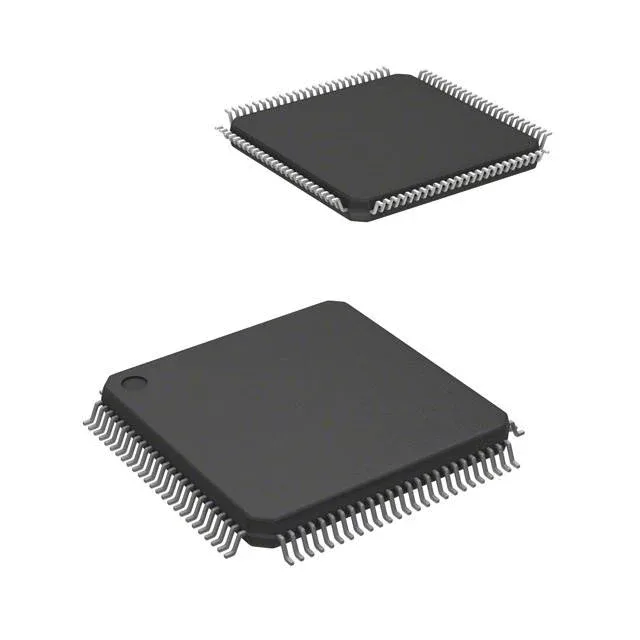
STMicroelectronics STM32H753VIT6 — Microcontrollers & Processors (MCU / MPU / DSP)

ST STM32H753VIT6 ARM Cortex-M7 MCU, 480MHz, 2MB Flash

MPNSTM32H753VIT6
Active

ST STM32H753, ARM Cortex-M7 480MHz, 2MB FLASH, 1MB RAM, 82 I/O, Ethernet/CAN/USB OTG/QSPI, 1.71–3.6V, 100-LQFP (14×14mm) Tray, -40°C to 85°C.

$19.8400Ref. price · indicative, final on quote
StockContact for availability
MOQ1 pcs
  • 100% new & originalTraceable channels only — no refurbs, no pulls, no remarked parts.
  • Date & lot codes on quoteStated per line before you commit; label photos on request.
  • MSL-compliant ESD packingMoisture-sealed bags with indicator cards; reels photo-verified.
  • PayPal buyer protectionPay by T/T, PayPal or Payoneer — card payments covered end to end.

Specifications

STM32H753VIT6 Technical Specifications
ParameterValue
SeriesSTM32H7
Mounting typeSurface Mount
Oscillator typeInternal
Program memory typeFLASH
Voltage - supply (Vcc (Vdd))1.71V ~ 3.6V
Operating temperature-40°C~85°C(TA)
Speed480MHz
PackageTray
RAM size1M x 8
Core size32-Bit Single-Core
PeripheralsBrown-out Detect/Reset, DMA, I²S, LCD, POR, PWM, WDT
ConnectivityCANbus, EBI/EMI, Ethernet, I²C, IrDA, LINbus, MDIO, MMC/SD/SDIO, QSPI, SAI, SPDIF, SPI, SWPMI, UART/USART, USB OTG
Number of i (O)82
Core processorARM® Cortex®-M7
Case100-LQFP
Data convertersA/D 36x16b; D/A 2x12b
Program memory size2MB (2M x 8)

Product details

What you are getting — the STM32H753VIT6 in the kit

This is the part you reach for when a design needs serious number-crunching and a rich peripheral set — Ethernet, dual CAN, USB OTG, QSPI, and multiple serial interfaces — all on a single chip.

480 MHz Cortex-M7 — what that speed buys you

At 480 MHz, this core can chew through DSP loops and real-time control algorithms that would bog down a slower MCU. The Cortex-M7 includes a double-precision FPU and a cache architecture, so floating-point math for sensor fusion or audio processing runs without stalling the pipeline. If you are sizing a BOM for a servo drive or a high-speed data logger, this clock rate is the headroom that keeps the firmware lean.

Memory and peripherals — sizing the BOM line

2 MB of Flash is generous for a complex application stack — think an RTOS, TCP/IP stack, GUI library, and still room for field-upgradeable firmware. The 1 MB of RAM (organized as 1M x 8) handles large frame buffers or multiple communication buffers without external memory. On the peripheral side, you get Ethernet MAC, dual CAN, USB OTG HS, QSPI for external Flash, plus a bank of 16-bit ADCs (36 channels) and two 12-bit DACs. That is enough connectivity to wire up a PLC or a gateway without glue logic.

Package and mounting — board-fit reality

The 100-LQFP (14×14 mm) is a hand-solderable footprint — no hot-air station required, which matters when you are swapping a part in the field. It is surface-mount only, so plan for reflow or selective solder.

ST lists the STM32H753VIT6 as Active. For a production BOM, this is the green light to commit.

Frequently asked questions

Can STM32H753VIT6 replace STM32H743VIT6?

The STM32H753VIT6 and STM32H743VIT6 share the same 100-LQFP footprint and are pin-compatible across the STM32H7 series. The H753 adds a hardware cryptographic accelerator and a true random number generator, so if your firmware does not use those blocks, the swap is straightforward. Check the errata for any subtle differences in the ADC or timing peripheral registers before committing.