Dual-core architecture — what the 240 MHz and 480 MHz mean for your firmware split
The STM32H747XIH6 is a 32-bit dual-core microcontroller from STMicroelectronics' STM32H7 series, pairing an ARM Cortex-M7 core running at 480 MHz with a Cortex-M4 core at 240 MHz. This asymmetric architecture lets you offload real-time control loops, communications stacks, or safety-monitoring tasks to the M4 while the M7 handles heavy number crunching, graphics rendering, or signal processing. The 2 MB of Flash and 1 MB of RAM give both cores enough headroom to run separate firmware images without external memory in many designs.
Peripheral set — Ethernet, CAN, and the I/O count that matters for gateway designs
The integrated LCD controller and SAI audio interface also suit it for GUI-heavy or audio-processing products.
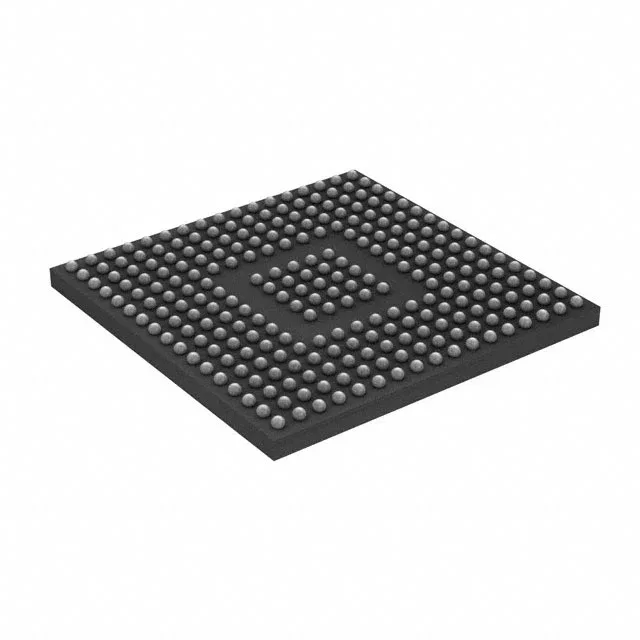
Package and thermal — 265-ball TFBGA, 14x14 mm
Supply voltage spans 1.62 V to 3.6 V, allowing a single 3.3 V rail or a split 1.8 V core / 3.3 V I/O scheme.
The base product number STM32H747 covers a range of Flash/RAM and package variants, but this specific XIH6 suffix (265-TFBGA, -40°C to 85°C) is the high-density, industrial-temperature option in the family.