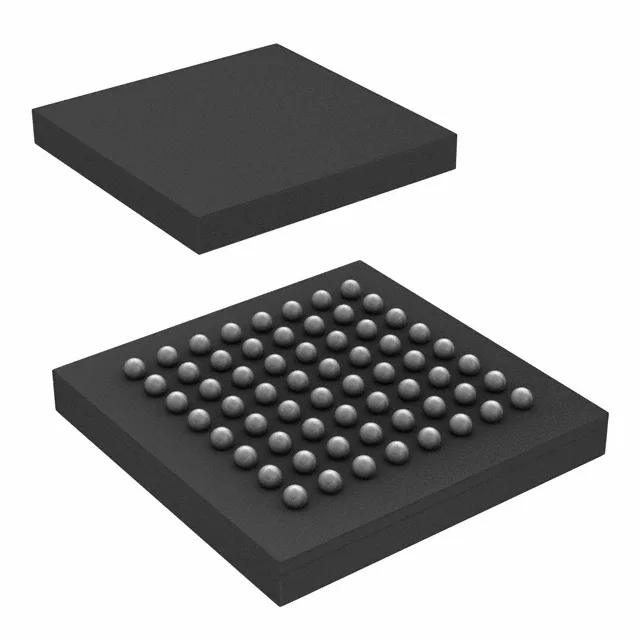
STMicroelectronics STM32G491REI6 — Microcontrollers & Processors (MCU / MPU / DSP)

STM32G491REI6 MCU, ARM Cortex-M4F 170 MHz, 512 KB Flash

MPNSTM32G491REI6
Active

STMicroelectronics STM32G4 series, STM32G491REI6, 32-bit ARM Cortex-M4F MCU, 170 MHz, 512 KB Flash, 112K x 8 RAM, 52 I/O, CANbus/I2C/SPI/USART/USB, 24x12b ADC, 4x12b DAC, -40°C to 85°C, 64-UFBGA (5x5 mm), Tray.

$9.0200Ref. price · indicative, final on quote
Packaging64-UFBGA
RoHSROHS3 Compliant
SeriesSTM32G4
Independent supplier — new & surplus stockAuthenticity-screened · ESD-safe packingListing updated Aug 2026

Specifications

STM32G491REI6 specifications
ParameterValue
SeriesSTM32G4
MountingSurface Mount
Oscillator typeInternal
Program memory typeFLASH
Voltage - supply (Vcc (Vdd))1.71V ~ 3.6V
Operating temperature-40°C ~ 85°C (TA)
Speed170MHz
PackageTray
RAM size112K x 8
Core size32-Bit Single-Core
PeripheralsBrown-out Detect/Reset, DMA, I2S, POR, PWM, WDT
ConnectivityCANbus, I2C, IrDA, IRTIM, LINbus, SAI, SPI, UART/USART, USB
Number of i (O)52
Core processorARM® Cortex®-M4F
Case64-UFBGA
Data convertersA/D 24x12b; D/A 4x12b
Program memory size512KB (512K x 8)

Product details

The 170 MHz clock is the headline number, but the practical gain comes from the Cortex-M4F's DSP extensions and single-cycle MAC. If your firmware runs a PID loop or a floating-point filter, this core saves you the cycle-count gymnastics an M3 or M0+ would need. The 112 KB SRAM gives enough headroom for two 256-point FFT buffers plus the control stack.

Analog peripherals: 24-channel ADC, 4-channel DAC

Twenty-four 12-bit ADC channels and four 12-bit DAC channels are on-chip. For a mixed-signal design like a three-phase motor controller with current sensing on all legs plus a DAC output for an analog reference, you can keep the bill of materials tight — no external ADC or DAC needed. The ADC can sample multiple channels in sequence without CPU intervention via the DMA engine listed in the peripherals block.

64-UFBGA 5x5 mm — layout and rework notes

The 52 I/O count in this package gives enough GPIO for a CAN node with a parallel LCD or a sensor array, but every pin is committed; there's no room for a spare.

On the connectivity side: CANbus, I2C, SPI, UART/USART, and USB are all present, along with SAI for audio serial interfaces and IrDA/IRTIM for infrared. The Brown-out Detect/Reset, POR, and WDT are standard safety peripherals for industrial environments.

It fits factory automation, outdoor telecom cabinets, and HVAC controllers.

Frequently asked questions

What is the difference between STM32G491REI6 and STM32G491RET6?

The STM32G491REI6 comes in a 64-UFBGA package (5x5 mm, 0.5 mm pitch), while the STM32G491RET6 uses an LQFP-64 package with gull-wing leads. The BGA variant saves board area but requires reflow soldering and X-ray inspection; the LQFP is easier to hand-assemble and inspect. All other specs — 170 MHz Cortex-M4F, 512 KB Flash, 112 KB SRAM, analog peripherals — are identical.

What development boards use the STM32G491REI6?

STMicroelectronics offers the NUCLEO-G491RE and STM32G491E-EVAL evaluation boards for the STM32G491 series. These boards provide access to all peripherals and are supported by STM32CubeIDE for firmware development.

Can I use STM32G491REI6 with STM32CubeIDE?

Yes, STM32CubeIDE fully supports the STM32G491 series, including the STM32G491REI6. The IDE provides project templates, peripheral configuration via CubeMX, and debug support through the SWD interface on the 64-UFBGA package.