What the 170 MHz Cortex-M4F means for your control loop
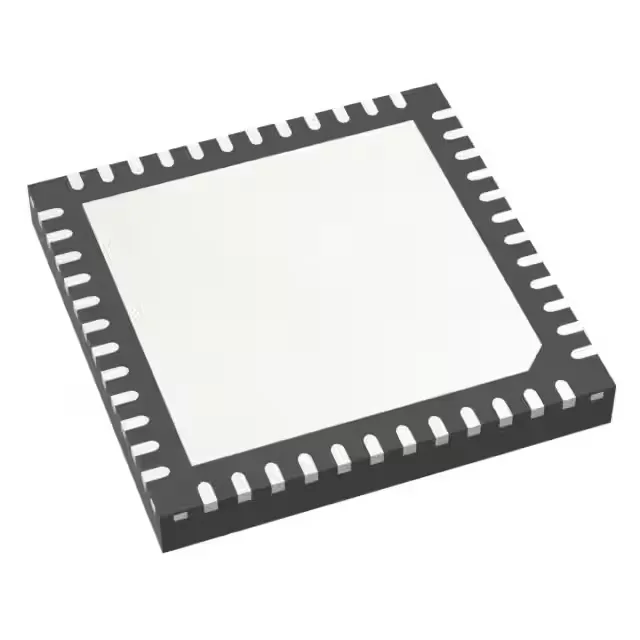
The STM32G474CCU3: The floating-point unit executes PID loops, motor-control transforms, and digital filter math in hardware without cycle-counting software emulation.
Analog peripheral count — reducing the external BOM
With 21 multiplexed 12-bit ADC channels and 7 independent 12-bit DAC outputs, this part handles multi-phase current sensing and simultaneous analog output generation without external converters. The ADC bank covers three-phase motor currents plus a DC-link voltage sense on a single chip; the DAC channels can drive setpoints for multiple power-stage references.
Connectivity and peripheral set for mixed-signal control
The I²S peripheral supports audio-class serial data, though the primary application is synchronous motor feedback rather than audio.
The 125 °C upper limit covers under-hood electronics, engine-bay sensor interfaces, and outdoor telecom equipment.
Without those vias, the junction temperature rises faster than the datasheet thermal resistance suggests at continuous 170 MHz operation with all peripherals active. MSL rating should be confirmed on the reel label for bake requirements before reflow.
This is a current-generation part in the STM32G4 family, not a legacy or phase-out line. For dual-sourcing resilience, the STM32G474CEU3 is a pin-compatible sibling with the same package and pinout, differing only in Flash density (512 KB versus 256 KB). The CEU3 variant is a drop-in replacement if the firmware fits the larger memory map, though the BOM cost delta is small enough that the CEU3 is often preferred for headroom. No second-source from another manufacturer exists — this is an ST-proprietary architecture.