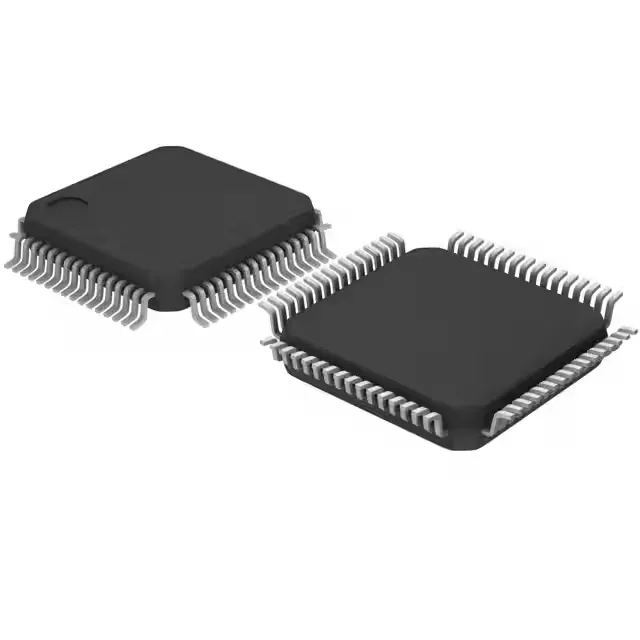
The 170 MHz core includes a single-precision floating-point unit, so you can run PID filters, sensor fusion, or FFT stages in C without a software emulation tax. That clock rate also gives headroom for the CANbus, SPI, and UART/USART peripherals to keep up with a 10 kHz control loop while the ADC samples on a separate DMA channel — the DMA engine and the Cortex-M4 pipeline overlap without stalling the main thread.
Supply range and power-up sequencing
If you are migrating from an older 5 V MCU family, note that all I/O are 3.6 V-tolerant, not 5 V; level shifters are required for legacy 5 V logic.
ST lists the STM32G431RBT3 as an active product with a current lifecycle stage.
No exposed pad underneath, so the thermal path is through the leads only; for high-current I/O banks, check the per-pin current limits in the datasheet. The tray shipping medium means the parts arrive in antistatic trays, not tape-and-reel, so factor that into your pick-and-place feeder setup if you are running a high-volume line.