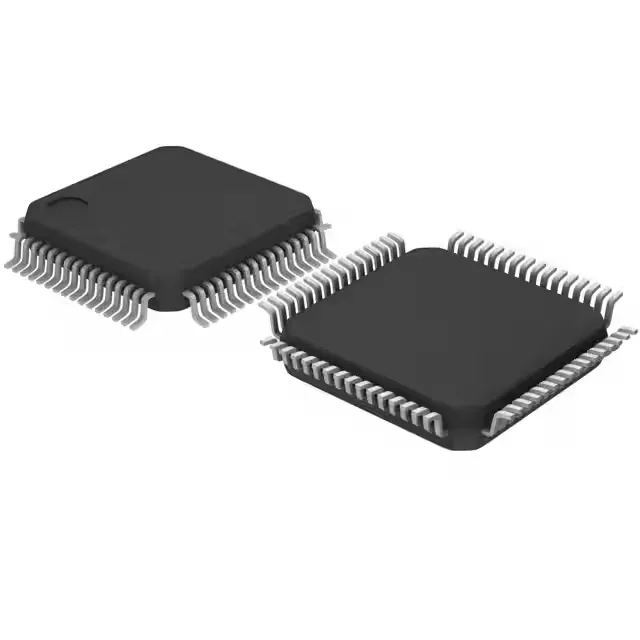
170 MHz Cortex-M4 with mixed-signal peripherals
The part integrates 23-channel 12-bit ADC and 4-channel 12-bit DAC converters, making it a fit for motor control, digital power conversion, and industrial sensing applications where analog signal chain and real-time control share the same die.
64 KB Flash, 32 KB SRAM — firmware headroom check
The 64 KB Flash is sized for control-loop firmware with a modest application layer — think field-oriented motor control with sensorless observers, or a single-axis servo stack. The 32 KB SRAM holds two or three 12-bit ADC buffer sets plus the control variables; if your application needs a large display frame buffer or a TCP/IP stack, the G431's memory tier may be tight. The 170 MHz Cortex-M4 with FPU and DSP instructions does the heavy math, but the memory map sets the ceiling for what fits.
23-ch ADC, 4-ch DAC — analog integration
The 23-channel 12-bit ADC and 4-channel 12-bit DAC let this MCU handle multi-phase current sensing and analog set-point generation without external converters. The ADC channels cover three-phase current plus a DC-link voltage sense in a typical motor drive, with channels left over for temperature or position feedback.
64-LQFP 10x10 mm — rework and layout
The 52 I/O lines fan out to two or four inner layers; a two-layer board routes it with careful signal assignment.
That means ST continues to manufacture it, accept new orders, and support it with datasheets, errata, and application notes.