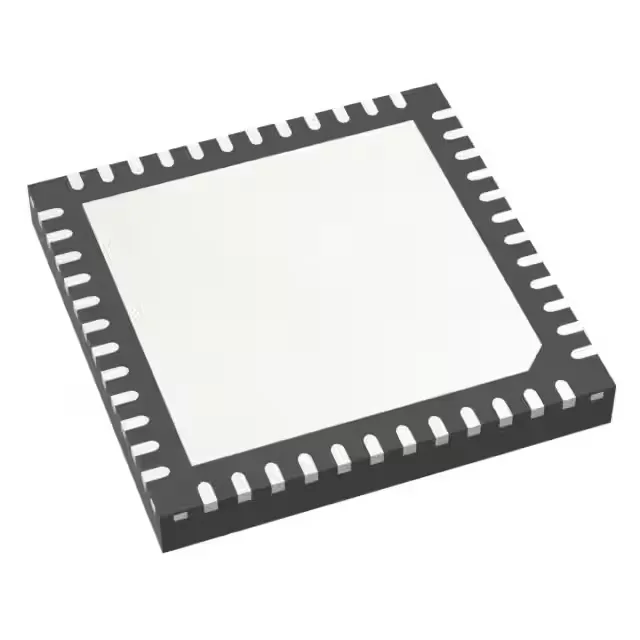
STMicroelectronics STM32G071CBU6 — Microcontrollers & Processors (MCU / MPU / DSP)

STM32G071CBU6 ARM Cortex-M0+ MCU, 64 MHz, 128 KB Flash

MPNSTM32G071CBU6
Active

STMicroelectronics STM32G0 series, STM32G071CBU6, 32-bit ARM Cortex-M0+ MCU, 64MHz, 128KB Flash, 36K x 8 RAM, 44 I/O, 1.71V~3.6V, -40°C~85°C, 48-UFQFPN (7x7).

$4.6400Ref. price · indicative, final on quote
Independent supplier — new & surplus stockAuthenticity-screened · ESD-safe packingListing updated Jul 2026

Specifications

STM32G071CBU6 specifications
ParameterValue
SeriesSTM32G0
MountingSurface Mount
Oscillator typeInternal
Program memory typeFLASH
Voltage - supply (Vcc (Vdd))1.71V ~ 3.6V
Operating temperature-40°C~85°C(TA)
Speed64MHz
PackageTray
RAM size36K x 8
Core size32-Bit Single-Core
PeripheralsBrown-out Detect/Reset, DMA, I²S, POR, PWM, WDT
ConnectivityHDMI-CEC, I²C, IrDA, LINbus, SPI, UART/USART
Number of i (O)44
Core processorARM® Cortex®-M0+
Case48-UFQFN Exposed Pad
Data convertersA/D 17x12b; D/A 2x12b
Program memory size128KB (128K x 8)

Product details

The 48-UFQFPN package with exposed pad (7x7 mm) keeps the PCB footprint small while the pad helps pull heat from the die in continuous operation.

Peripherals and connectivity for a system controller

44 I/O lines give enough headroom for a keypad, a small TFT display, and a few sensor interrupts. Two 12-bit DACs and a 17-channel 12-bit ADC handle analog I/O without an external converter.

ST lists the STM32G071CBU6 as an active product — no last-time-buy notice, no EOL risk in the near term.

Frequently asked questions

How does STM32G071CBU6 compare to STM32G071CBT6?

The two share the same core, Flash density, RAM, and peripheral set. The difference is the package: the CBU6 comes in a 48-UFQFPN (7x7 mm) with exposed pad, while the CBT6 uses a 48-LQFP (7x7 mm) with gull-wing leads. The UFQFPN saves board height and has a smaller footprint, but the LQFP is easier to hand-solder and inspect. Choose the UFQFPN for compact, reflow-only assembly; pick the LQFP for prototyping or rework-friendly layouts.