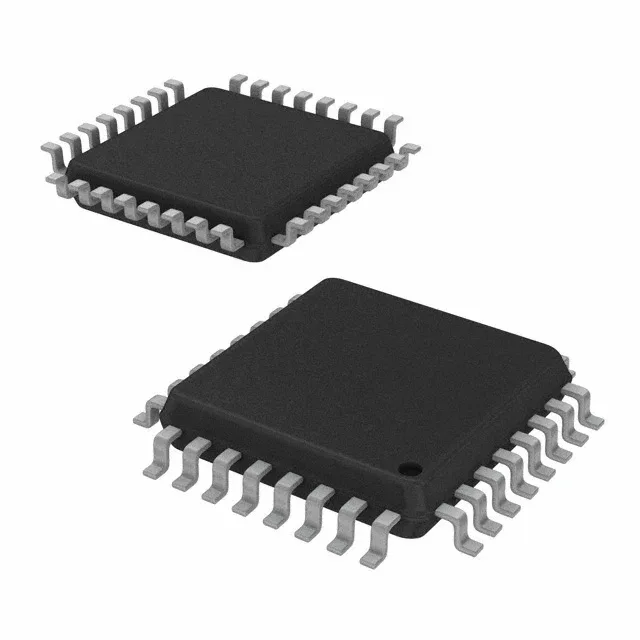
64 MHz Cortex-M0+ with 64 KB Flash — what it buys you
It is built for cost-sensitive, power-aware embedded control — think sensor hubs, motor commutation, basic HMI panels, and IoT edge nodes where a full Cortex-M3/M4 is overkill but an 8-bit core leaves no headroom. The 64 MHz clock rate is the practical throughput ceiling for this core; at that speed the Flash prefetch buffer needs to be configured correctly (one wait state) or the first branch after a clock change will hard-fault. On the analog side, the 18-channel 12-bit ADC covers a lot of sensor inputs — current shunts, thermistors, potentiometers — without needing an external mux. The 12-bit resolution is adequate for 0.1% measurement loops; if you need 14+ effective bits, an external SAR ADC is the next step.
Peripherals and connectivity — what is on the bus
The brown-out detect, POR, and programmable watchdog are standard for industrial robustness — the BOR can be tuned to the supply rail so the MCU resets cleanly before the regulator drops out of regulation. With 30 I/O in the 32-LQFP package, most pins are shared between GPIO and alternate functions. The LQFP (7x7 mm) is a hand-solderable, inspectable package — no BGA rework needed, which matters for low-volume production or field repair.