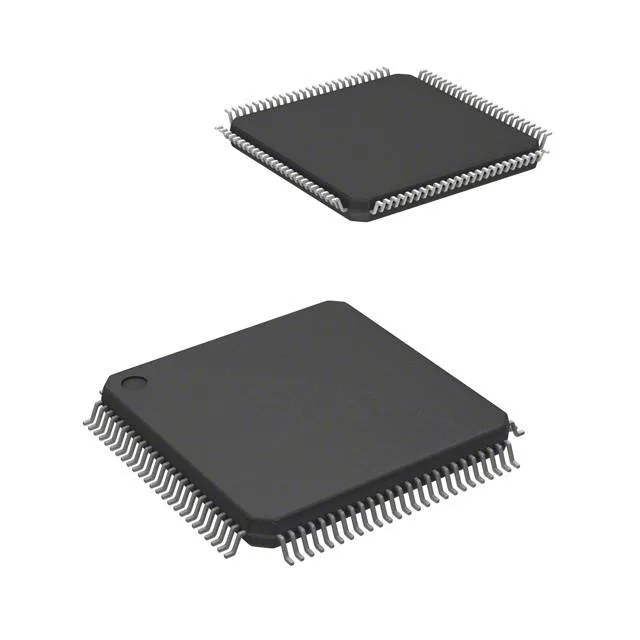
STMicroelectronics STM32F756VGT6 — Microcontrollers & Processors (MCU / MPU / DSP)

STM32F756VGT6 ARM Cortex-M7 MCU, 216 MHz, 1 MB Flash

MPNSTM32F756VGT6
Active

STMicroelectronics STM32F7 series, STM32F756VGT6, ARM Cortex-M7 32-bit MCU at 216 MHz, 1 MB Flash, 320 KB RAM, 82 I/O, Ethernet + CAN, 100-LQFP, -40 to 85°C.

$17.7600Ref. price · indicative, final on quote
Packaging100-LQFP
RoHSROHS3 Compliant
SeriesSTM32F7
Independent supplier — new & surplus stockAuthenticity-screened · ESD-safe packingListing updated Aug 2026

Specifications

STM32F756VGT6 specifications
ParameterValue
SeriesSTM32F7
MountingSurface Mount
Oscillator typeInternal
Program memory typeFLASH
Voltage - supply (Vcc (Vdd))1.7V ~ 3.6V
Operating temperature-40°C ~ 85°C (TA)
Speed216MHz
PackageTray
RAM size320K x 8
Core size32-Bit Single-Core
PeripheralsBrown-out Detect/Reset, DMA, LCD, POR, PWM, WDT
ConnectivityCANbus, Ethernet, HDMI-CEC, I²C, IrDA, LINbus, MMC/SD, SAI, SPDIFRX, SPI, UART/USART, USB OTG
Number of i (O)82
Core processorARM® Cortex®-M7
Case100-LQFP
Data convertersA/D 16x12b; D/A 2x12b
Program memory size1MB (1M x 8)

Product details

It is part of the STM32F7 series, ST's high-performance line aimed at applications that need real-time signal processing, rich connectivity, and a display interface without moving to an external MPU. The 216 MHz core clock with the Cortex-M7's single-cycle multiply-accumulate and double-precision floating-point unit gives this part enough headroom for sensor fusion, motor-control loops, or audio processing where the algorithm fits inside 1 MB of program space. The 320 KB RAM is generous for an MCU-class device; it can hold a full Ethernet TCP/IP stack buffer plus several display frame buffers without external memory. Connectivity includes Ethernet MAC, CAN, USB OTG, multiple SPI and I²C ports, plus an SAI audio interface and SPDIFRX — so a single chip can handle the network gateway, local control bus, and human-machine interface in an industrial controller or building-management panel.

216 MHz — timing budget and clock-tree reality

At 216 MHz the flash memory requires wait states; the STM32F7's ART Accelerator handles instruction prefetch and cache to keep the effective throughput near the core speed for most code. The internal oscillator is available for boot, but a precision external crystal is recommended for Ethernet or USB operation where clock accuracy matters.

This is a current-production STM32F7 part, not on any announced phase-out or last-time-buy schedule.

Frequently asked questions

What is the maximum clock speed of STM32F756VGT6?

The core processor runs at 216 MHz maximum, which is the rated speed for this ARM Cortex-M7 device.

What is the difference between STM32F756VGT6 and STM32F767VGT6?

The STM32F767VGT6 is a higher-tier sibling in the same STM32F7 family, typically offering additional peripherals or memory. For a detailed comparison of specific parametric differences, refer to the STM32F7 series comparison table in the official ST documentation.