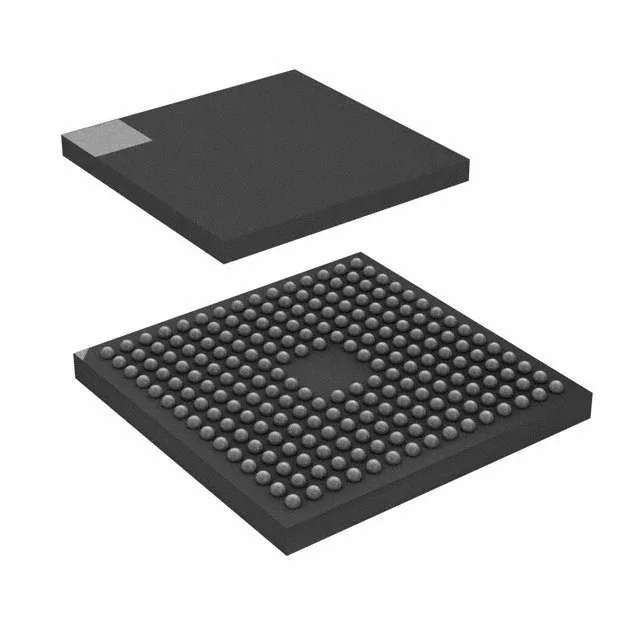
What this Cortex-M7 brings to the board
It's built for applications that need real-time responsiveness and a rich peripheral set — think motor drives with Ethernet backhaul, HMI panels driving a display via the built-in LCD controller, or industrial gateways juggling CAN, USB OTG, and multiple UARTs.
At 216 MHz, this core can handle single-cycle multiply-accumulate and hardware divide, which matters for control loops running at tens of kilohertz. The Cortex-M7 includes a double-precision FPU, so you're not burning cycles on software floating-point for sensor fusion or audio processing. If you're coming from a 72 MHz Cortex-M3 design, expect roughly 3x the throughput on integer code, but budget for flash wait states — the STM32F7's prefetch buffer and ART Accelerator help, but tight loops with random access patterns still see a few cycles of latency.
The Flash holds a full RTOS, TCP/IP stack, and application code without needing external SPI Flash for most mid-complexity projects. The 320 KB RAM splits across TCM and AXI SRAM — the 64 KB ITCM and 64 KB DTCM give zero-wait access for critical interrupt handlers and data buffers, leaving the rest for general-purpose heap and stack. If your design runs a GUI framebuffer or large audio buffers, you'll still need external SDRAM, but for many control and connectivity applications this is enough on-chip.
Connectivity — what's on the bus
This part includes Ethernet MAC, two CAN interfaces, USB OTG (HS with ULPI), and a full set of SPI, I2C, UART, and SAI peripherals. The EBI/EMI interface lets you hang external SRAM, NOR Flash, or an LCD controller off the bus. For a system architect, this means one MCU can handle the control, communication, and display tasks that would otherwise need two or three chips. The SPDIF-Rx interface is a bonus for audio applications — it's not common on general-purpose MCUs.