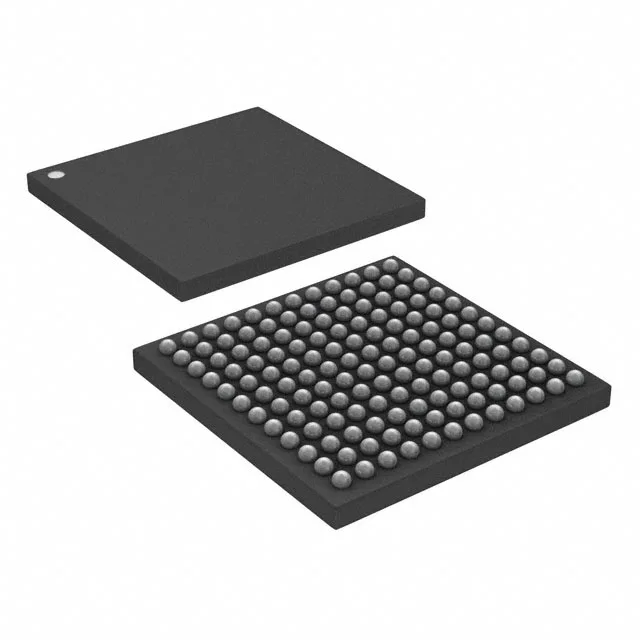
STMicroelectronics STM32F723ZEI6 — Microcontrollers & Processors (MCU / MPU / DSP)

STM32F723ZEI6 STM32F7 ARM Cortex-M7 MCU, 216 MHz

MPNSTM32F723ZEI6
Active

STMicroelectronics STM32F7 series STM32F723ZEI6, ARM Cortex-M7 32-bit single-core MCU, 216 MHz, 512 KB Flash, 256K x 8 RAM, 144-UFBGA, -40 to 85 °C.

$15.3400Ref. price · indicative, final on quote
Independent supplier — new & surplus stockAuthenticity-screened · ESD-safe packingListing updated Jul 2026

Specifications

STM32F723ZEI6 specifications
ParameterValue
SeriesSTM32F7
MountingSurface Mount
Oscillator typeInternal
Program memory typeFLASH
Voltage - supply (Vcc (Vdd))1.7V ~ 3.6V
Operating temperature-40°C ~ 85°C (TA)
Speed216MHz
PackageTray
RAM size256K x 8
Core size32-Bit Single-Core
PeripheralsBrown-out Detect/Reset, DMA, I²S, POR, PWM, WDT
ConnectivityCANbus, EBI/EMI, I²C, IrDA, LINbus, MMC/SD, QSPI, SAI, SPI, UART/USART, USB
Number of i (O)112
Core processorARM® Cortex®-M7
Case144-UFBGA
Data convertersA/D 24x12b; D/A 2x12b
Program memory size512KB (512K x 8)

Product details

The 144-UFBGA package (7x7 mm) keeps the footprint small, but BGA rework needs a hot-air profile and careful bake if the moisture barrier has been opened past the floor-life window.

The internal oscillator is available, but for timing-critical USB or CAN applications, an external crystal is the usual choice to keep jitter within the spec.

Frequently asked questions

What are the key differences between STM32F723ZEI6 and STM32F722ZEI6?

Both parts run the same ARM Cortex-M7 core at 216 MHz and share the same 144-UFBGA package and pinout. The STM32F723ZEI6 includes additional cache memory and a few extra peripheral features compared to the STM32F722ZEI6, but the exact delta is in the STM32F7 reference manual. For a drop-in replacement check, verify the peripheral list against your firmware configuration.

Can I use STM32F723ZEI6 without an external crystal?

Yes, the STM32F723ZEI6 has an internal oscillator that can serve as the system clock source. However, for applications requiring precise timing — such as USB or CAN communication — an external crystal is recommended to meet the jitter and accuracy requirements of those protocols.