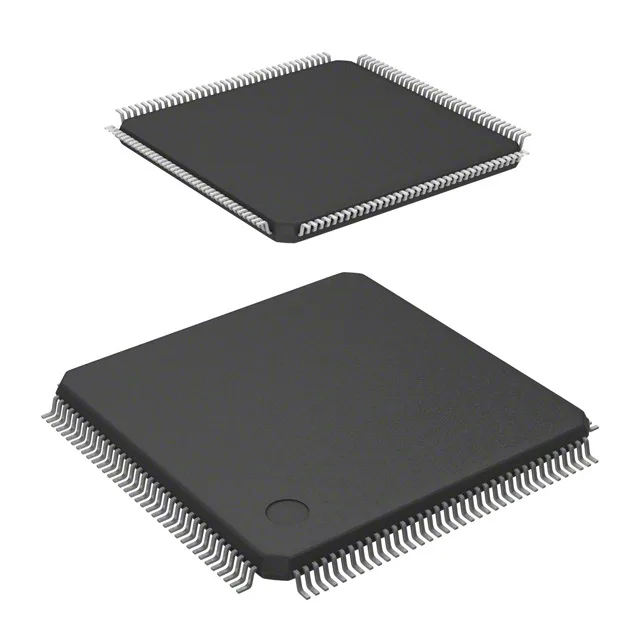
216 MHz ARM Cortex-M7 — what that means on the bus
It packs 112 general-purpose I/O and a connectivity set that includes USB, CAN, QSPI, multiple SPI/I2C/UART, and an external memory interface (EBI/EMI). It is a fit for industrial motor drives, building automation gateways, and human-machine interfaces where the Cortex-M7 DSP extension and floating-point unit offload the main loop.
Industrial temperature and supply — where it runs
If you are dual-sourcing, the STM32L151CBU6A is a different power-optimized family (Cortex-M3, 32 MHz) and is not a pin-compatible swap; stay within the STM32F7 series for a drop-in alternative.
Memory and peripherals — sizing the firmware and the bus
256 KB of Flash and 256 KB of SRAM is the mid-density tier in the STM32F7 line — enough for a FreeRTOS application with a TCP/IP stack and a modest GUI framebuffer, but tight for a full Linux-class workload. Connectivity includes CANbus for automotive/industrial networks, QSPI for external Flash/PSRAM expansion, and USB (host/device) for data logging or firmware updates.