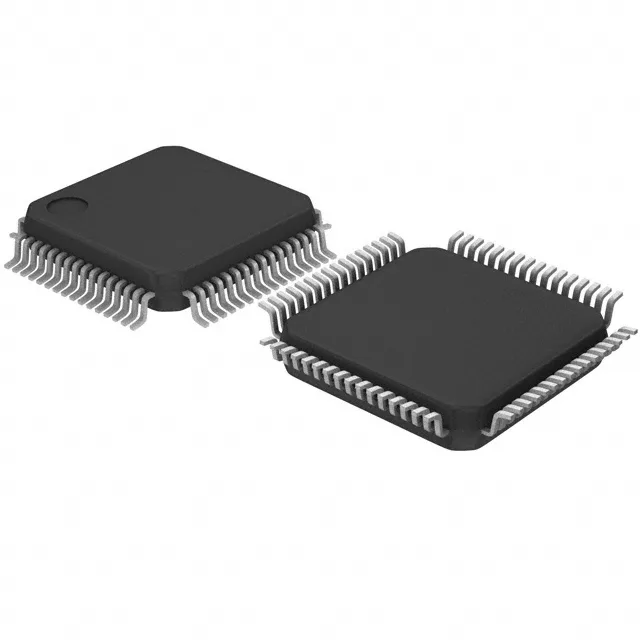
What this STM32F446RCT6 brings to the BOM
On the peripheral side, this MCU includes a 16-channel 12-bit ADC, two 12-bit DACs, and a full set of connectivity: CANbus, USB OTG, SPI, I2C, UART/USART, SAI, and SPDIF-Rx. The 50 general-purpose I/Os in the 64-LQFP package give enough pins for a modest sensor array, display interface, and external memory bus without needing a larger footprint.
The 180 MHz core clock puts this part in the performance tier of the STM32F4 family. Compared to the STM32L151CBU6A which runs a Cortex-M3 at 32 MHz, the STM32F446RCT6 delivers roughly 5.6x the clock rate for DSP and floating-point workloads. The Cortex-M4 includes a single-precision FPU and DSP instructions, so FIR filters, FFTs, and motor-control PID loops execute in hardware rather than emulated in software. For a BOM cost engineer, this means you can skip an external DSP or FPGA for many signal-chain tasks, consolidating the BOM. The 128 KB of RAM is sized for moderate frame buffers and protocol stacks. If your application streams audio or runs a TCP/IP stack with large windows, budget the RAM against the heap and stack requirements early — the 128 K x 8 is generous for a 64-pin MCU but not unlimited.
Lifecycle and supply outlook
ST continues to manufacture this part as a current-production line item in the STM32F4 series. For a storeroom keeper, this means the part is safe to stock for new designs and spares planning — no urgent cross-reference needed.
The 50 I/O pins include multiple alternate functions, so a layout engineer should check the pin assignment against the peripheral mix before routing.