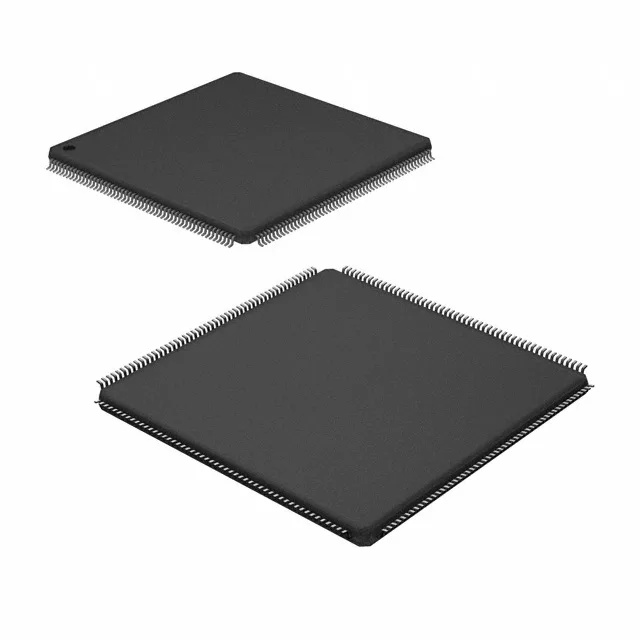
STMicroelectronics STM32F439BIT6 — Microcontrollers & Processors (MCU / MPU / DSP)

STM32F439BIT6 — STM32F4 180MHz 32-Bit MCU, 2MB Flash, 256KB RAM, 208-LQFP

MPNSTM32F439BIT6
End of Life

STMicroelectronics STM32F4 series, 32-bit ARM Cortex-M4 single-core MCU, 180MHz, 2MB Flash, 256KB RAM, 168 I/O, 208-lead LQFP (28×28mm) tray, 1.8–3.6V supply, -40°C to 85°C.

$22.6300Ref. price · indicative, final on quote
StockContact for availability
MOQ1 pcs
  • 100% new & originalTraceable channels only — no refurbs, no pulls, no remarked parts.
  • Date & lot codes on quoteStated per line before you commit; label photos on request.
  • MSL-compliant ESD packingMoisture-sealed bags with indicator cards; reels photo-verified.
  • PayPal buyer protectionPay by T/T, PayPal or Payoneer — card payments covered end to end.

Specifications

STM32F439BIT6 Technical Specifications
ParameterValue
SeriesSTM32F4
Mounting typeSurface Mount
Oscillator typeInternal
Program memory typeFLASH
Voltage - supply (Vcc (Vdd))1.8V ~ 3.6V
Operating temperature-40°C~85°C(TA)
Speed180MHz
PackageTray
RAM size256K x 8
Core size32-Bit Single-Core
PeripheralsBrown-out Detect/Reset, DMA, I²S, LCD, POR, PWM, WDT
ConnectivityCANbus, EBI/EMI, Ethernet, I²C, IrDA, LINbus, SPI, UART/USART, USB OTG
Number of i (O)168
Core processorARM® Cortex®-M4
Case208-LQFP
Data convertersA/D 24x12b; D/A 2x12b
Program memory size2MB (2M x 8)

Frequently asked questions

Does the STM32F439BIT6 drop into an existing STM32F407 board layout?

The STM32F439BIT6 uses a 208-lead LQFP package, whereas many STM32F407 variants use a 144-lead LQFP. The 168 I/O count and 208-lead footprint differ sufficiently that a direct layout swap is not guaranteed — verify the pinout mapping and PCB pad compatibility before committing a retrofit.

What temperature range does the STM32F439BIT6 support?

The STM32F439BIT6 is rated for -40°C to 85°C ambient (TA). This is the industrial temperature grade, not the full automotive -40°C to 125°C range. At 180MHz under sustained compute load near the 85°C upper limit, junction temperature and PCB thermal design require attention.