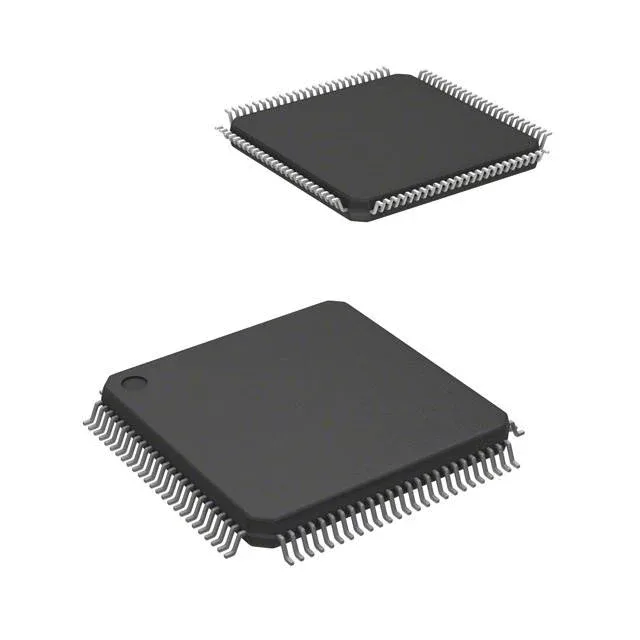
STMicroelectronics STM32F407VET6 — Microcontrollers & Processors (MCU / MPU / DSP)

STM32F407VET6 STM32F4 ARM Cortex-M4 MCU, 168MHz, 512KB Flash

MPNSTM32F407VET6
Active

STMicroelectronics STM32F4 series STM32F407VET6, ARM Cortex-M4 32-bit single-core MCU, 168MHz, 512KB Flash, 192K x 8 RAM, 82 I/O, Ethernet/CAN/USB OTG, 100-LQFP (14x14), -40°C to 85°C.

$7.35057Ref. price · indicative, final on quote
Independent supplier — new & surplus stockAuthenticity-screened · ESD-safe packingListing updated Aug 2026

Specifications

STM32F407VET6 specifications
ParameterValue
SeriesSTM32F4
MountingSurface Mount
Oscillator typeInternal
Program memory typeFLASH
Voltage - supply (Vcc (Vdd))1.8V ~ 3.6V
Operating temperature-40°C~85°C(TA)
Speed168MHz
PackageTray
RAM size192K x 8
Core size32-Bit Single-Core
PeripheralsBrown-out Detect/Reset, DMA, I²S, LCD, POR, PWM, WDT
ConnectivityCANbus, DCMI, EBI/EMI, Ethernet, I²C, IrDA, LINbus, SPI, UART/USART, USB OTG
Number of i (O)82
Core processorARM® Cortex®-M4
Case100-LQFP
Data convertersA/D 16x12b; D/A 2x12b
Program memory size512KB (512K x 8)

Product details

The STM32F407VET6 is an STMicroelectronics STM32F4 series MCU built around an ARM Cortex-M4 core with single-cycle DSP instructions and a floating-point unit. The 168 MHz clock rate gives it headroom for real-time control loops, sensor fusion, and audio processing that an M3 at comparable speed would struggle with on floating-point math. The 512 KB Flash and 192 KB SRAM are enough for a moderate firmware stack with a FreeRTOS or bare-metal scheduler, plus a TCP/IP buffer pool if you're using the on-chip Ethernet MAC. The peripheral set is the main event: Ethernet MAC with dedicated DMA, two CAN 2.0B interfaces, USB OTG HS/FS, three SPI, three I²C, six USARTs plus IrDA and LIN support, and a DCMI for camera input. The 82 GPIOs in the 100-LQFP package give enough breakout for a parallel LCD or an external memory bus via the FSMC controller. Brown-out reset, power-on reset, and a programmable voltage detector are built in, so external supervisor ICs are optional in most designs.

The internal oscillator can serve as the system clock for non-critical timing, though the Ethernet PHY will want an external 25 MHz crystal for accurate link rates.

ST continues to support the STM32F4 family with regular datasheet updates and errata revisions.

Frequently asked questions

Does STM32F407VET6 have Ethernet and CAN interfaces?

Yes. The connectivity block includes an Ethernet MAC with dedicated DMA, two CAN 2.0B controllers, and USB OTG high-speed/full-speed. These are on-chip peripherals — no external controller chip needed for basic CAN or Ethernet connectivity.

What is the difference between STM32F407VET6 and STM32F407VGT6?

The main difference is Flash memory density: the VET6 has 512 KB, while the VGT6 carries 1 MB. Both share the same 100-LQFP footprint, 168 MHz Cortex-M4 core, 192 KB SRAM, and identical peripheral set including Ethernet and CAN. The VGT6 is the upgrade path if your firmware image exceeds 512 KB.

What package does STM32F407VET6 come in?

It ships in a 100-pin LQFP (low-profile quad flat pack) with a 14x14 mm body. Surface-mount only. The tray packaging is the standard shipping medium for this package size.