Cortex-M4 with mixed-signal muscle
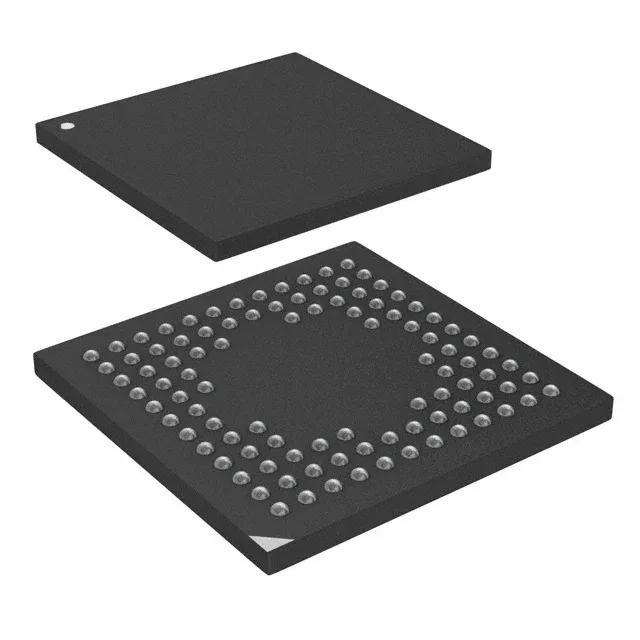
What sets this part apart within the STM32F3 line is the analog front end: three 16-bit sigma-delta ADCs and three 12-bit DACs, alongside one 12-bit SAR ADC, letting it handle precision sensor acquisition and analog output without external converters. The 100-UFBGA package (7x7 mm) keeps the footprint small for dense PCB layouts, though the BGA requires controlled reflow and X-ray inspection.
Where the 16-bit ADC matters
The three 16-bit sigma-delta ADCs are the headline feature for designs that need better than 12-bit resolution on multiple channels — think weigh scales, pressure transducers, or current-sense in motor drives where the extra bits save an external ADC and its SPI interface. The three 12-bit DACs can simultaneously drive analog outputs for setpoint control or waveform generation. The 72 MHz Cortex-M4 handles the math for PID loops, digital filters, or FFT analysis on the acquired data without a separate DSP.
The supply range of 2.0 V to 3.6 V covers both 3.3 V and battery-backed 2.5 V rails, though the internal oscillator and Flash read path need a clean 3.3 V for full 72 MHz operation. The 100-UFBGA package with 0.5 mm pitch demands careful PCB land pattern design and a stencil aperture that matches the 7x7 mm body — not a hand-solder part, but fine for automated assembly lines.
For new designs this removes the obsolescence risk that haunts older STM32F1 or F2 parts. The base product number STM32F373 covers a range of Flash and package options, so if a future BOM needs more memory or a different footprint, the migration stays within the same family and peripheral set.