72 MHz Cortex-M4 with FPU — the control-loop workhorse
It targets real-time control applications — motor drives, digital power conversion, and sensor fusion — where the single-precision FPU and 12-bit ADC array (eight channels) give it an edge over a plain Cortex-M3 at the same clock speed.
The Flash is enough for a field-oriented motor-control stack plus a Modbus RTU or CANopen stack, but leaves little room for a full RTOS with TCP/IP. The 16 KB SRAM handles a couple of 256-point FFT buffers or a modest state-machine scheduler. If your application needs a larger heap or OTA staging area, step up to the STM32F303 series with 48 KB SRAM.
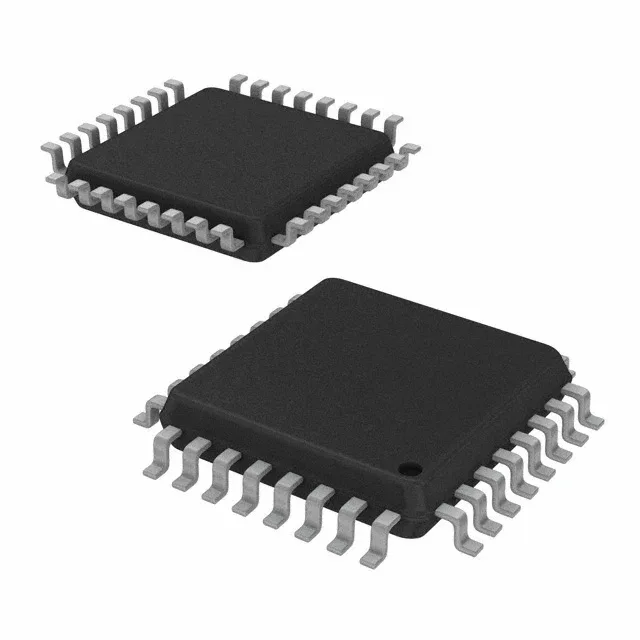
Package and assembly — 32-LQFP (7x7 mm)
The 32-LQFP package with a 7x7 mm body and 0.8 mm pitch is a standard, pick-and-place-friendly footprint. The 25 I/O pins are enough for a sensor hub with a few UART, SPI, and I²C peripherals, but you will run out of pins quickly if you need a parallel LCD or multiple external ADCs.