72 MHz Cortex-M3 — timing and throughput
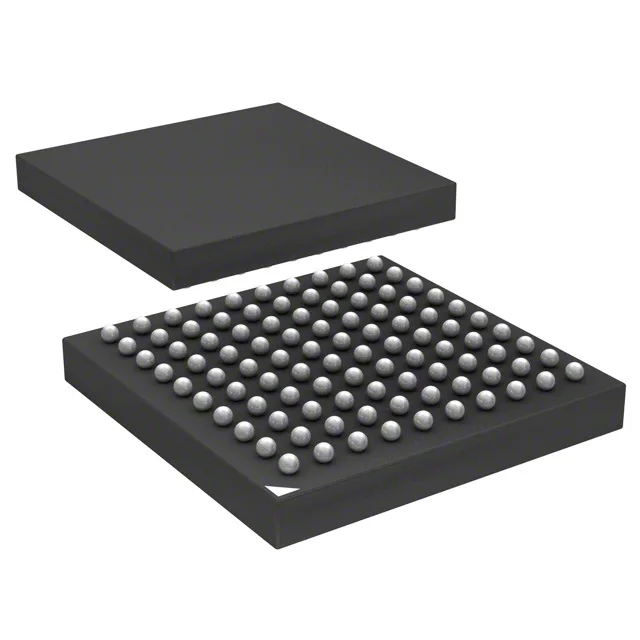
The STM32F107VCH6: The 72 MHz core clock is the maximum for the STM32F1 series. The internal oscillator is accurate enough for UART and CAN.
Ethernet and USB OTG — what the connectivity means
This is one of the few STM32F1 parts with both Ethernet MAC and USB OTG on the same die. The Ethernet MAC supports MII/RMII and needs an external PHY; the USB OTG handles host/device switching. The two CAN 2.0B ports share the same bus with the Ethernet controller, so a gateway node can bridge a CAN fieldbus to an IP network without an external host processor. The 80 I/O lines leave room for parallel displays, external memory, or a bank of sensors.
It is ROHS3 compliant. There is no official second-source alternate in the STM32F1 family, but the STM32L151CBU6A (a lower-power Cortex-M3 with 32 MHz max speed and no Ethernet) is a functional alternative only if the connectivity and performance requirements are relaxed.