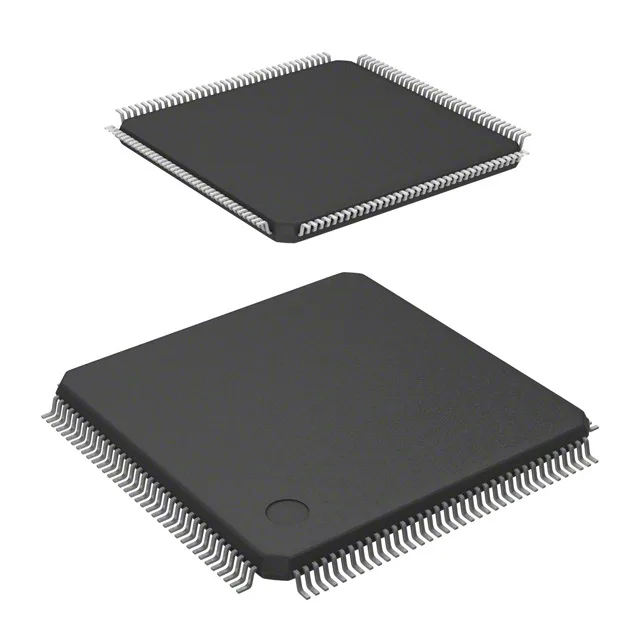
STMicroelectronics STM32F103ZFT6 — Microcontrollers & Processors (MCU / MPU / DSP)

STM32F103ZFT6 STM32 MCU, ARM Cortex-M3 72MHz, 768KB Flash

MPNSTM32F103ZFT6
Active

STMicroelectronics STM32F1 series, STM32F103ZFT6, ARM Cortex-M3, 32-Bit Single-Core, 72MHz, 768KB Flash, 96K x 8 RAM, DMA, Motor Control PWM, CANbus, I²C, SPI, USB, 112 I/O, 144-LQFP, -40°C to 85°C.

$13.3000Ref. price · indicative, final on quote
Packaging144-LQFP
RoHSROHS3 Compliant
SeriesSTM32F1
Independent supplier — new & surplus stockAuthenticity-screened · ESD-safe packingListing updated Aug 2026

Specifications

STM32F103ZFT6 specifications
ParameterValue
SeriesSTM32F1
MountingSurface Mount
Oscillator typeInternal
Program memory typeFLASH
Voltage - supply (Vcc (Vdd))2V ~ 3.6V
Operating temperature-40°C ~ 85°C (TA)
Speed72MHz
PackageTray
RAM size96K x 8
Core size32-Bit Single-Core
PeripheralsDMA, Motor Control PWM, PDR, POR, PVD, PWM, Temp Sensor, WDT
ConnectivityCANbus, I²C, IrDA, LINbus, SPI, UART/USART, USB
Number of i (O)112
Core processorARM® Cortex®-M3
Case144-LQFP
Data convertersA/D 21x12b; D/A 2x12b
Program memory size768KB (768K x 8)

Product details

72 MHz Cortex-M3 with 768 KB Flash in a 144-LQFP

It sits in the STM32F1 series — the workhorse line for industrial control, motor drives, and embedded systems that need a proven, well-documented core. The 144-LQFP package (20x20 mm body) gives you 112 usable I/O lines, which is enough to interface with parallel displays, multiple encoder inputs, and a full sensor suite without multiplexing.

The 112 I/O count on the 144-LQFP footprint is a practical differentiator. If your design needs to drive a TFT display (parallel RGB interface eats 24 pins), read six quadrature encoders (12 pins), and still have CAN and USB active, you won't run out of GPIOs. The motor control PWM timer with complementary outputs and dead-time insertion is hardware-ready for three-phase inverter control — no external PLD needed for the switching logic. The 96K x 8 RAM gives enough headroom for double-buffered ADC data and a modest frame buffer. If you are coming from a 256 KB or 512 KB part, this is the step up that avoids a mid-project memory squeeze.

Frequently asked questions

What is the difference between STM32F103ZFT6 and STM32F103ZET6?

The primary difference is Flash density: the ZFT6 has 768 KB of Flash, while the ZET6 typically carries 512 KB. Both share the same 144-LQFP package, 72 MHz Cortex-M3 core, and peripheral set. The extra 256 KB in the ZFT6 supports larger firmware images or OTA staging buffers.