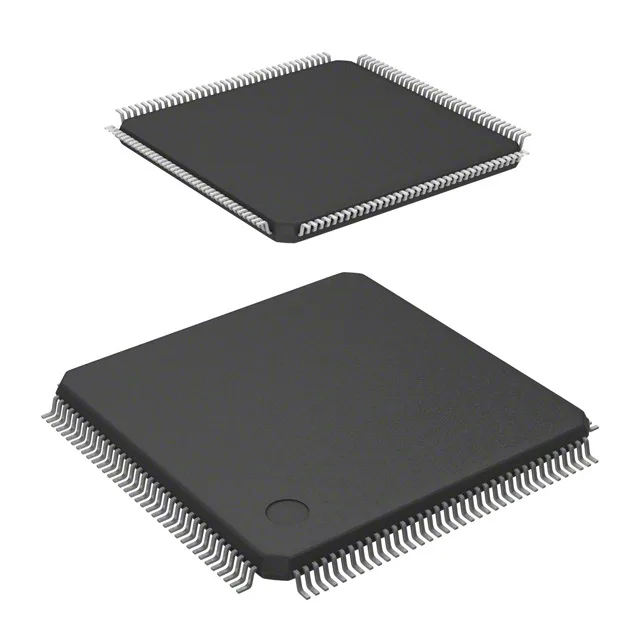
STMicroelectronics STM32F103ZET6 — Microcontrollers & Processors (MCU / MPU / DSP)

STM32F103ZET6 32-bit ARM Cortex-M3 MCU, 72 MHz, 512 KB Flash

MPNSTM32F103ZET6
Active

STMicroelectronics STM32F1 series STM32F103ZET6, ARM Cortex-M3 32-bit MCU, 72 MHz, 512 KB Flash, 64 KB SRAM, 112 I/O, 144-LQFP, -40 to 85°C, 2 V to 3.6 V supply.

$12.1300Ref. price · indicative, final on quote
Packaging144-LQFP
RoHSROHS3 Compliant
SeriesSTM32F1
Independent supplier — new & surplus stockAuthenticity-screened · ESD-safe packingListing updated Aug 2026

Specifications

STM32F103ZET6 specifications
ParameterValue
SeriesSTM32F1
MountingSurface Mount
Oscillator typeInternal
Program memory typeFLASH
Voltage - supply (Vcc (Vdd))2V ~ 3.6V
Operating temperature-40°C ~ 85°C (TA)
Speed72MHz
PackageTray
RAM size64K x 8
Core size32-Bit Single-Core
PeripheralsDMA, Motor Control PWM, PDR, POR, PVD, PWM, Temp Sensor, WDT
ConnectivityCANbus, I²C, IrDA, LINbus, SPI, UART/USART, USB
Number of i (O)112
Core processorARM® Cortex®-M3
Case144-LQFP
Data convertersA/D 21x12b; D/A 2x12b
Program memory size512KB (512K x 8)

Product details

512 KB Flash, 72 MHz Cortex-M3 — industrial workhorse

It packs 112 I/O lines, a full set of peripherals including DMA, motor-control PWM, multiple ADCs/DACs, and CAN/USB/SPI/I²C interfaces.

At 72 MHz the Cortex-M3 delivers about 1.25 DMIPS/MHz, enough for real-time control loops and moderate protocol stacks. The 512 KB Flash needs zero wait states up to 24 MHz; above that the flash controller inserts one wait state per the clock tree setup. If you're porting code from a lower-speed part, budget for the flash latency adjustment in the startup routine or the first branch will hard-fault.

112 I/O and peripheral mix — what connects where

With 112 I/O in a 144-LQFP package, this part handles parallel LCD buses, multiple UARTs, and CAN nodes without external GPIO expanders. The peripheral set includes two 12-bit ADCs (21 channels), two 12-bit DACs, motor-control PWM timers, and a USB 2.0 full-speed device. The 64 KB SRAM is adequate for a small RTOS heap and double-buffered ADC data; if you need larger frame buffers, consider the STM32F105/107 series with 64 KB SRAM plus external memory interface.

For production planning this means standard lead times through distribution and no forced redesign horizon. The part is ROHS3 compliant.

Frequently asked questions

What is the difference between STM32F103ZET6 and STM32F103VET6?

Both are STM32F103 series parts with the same core, speed, and memory. The key difference is package and pin count: the ZET6 uses a 144-LQFP with 112 I/O, while the VET6 uses a 100-LQFP with fewer I/O. The VET6 is a lower pin-count option if you don't need the full I/O bank.