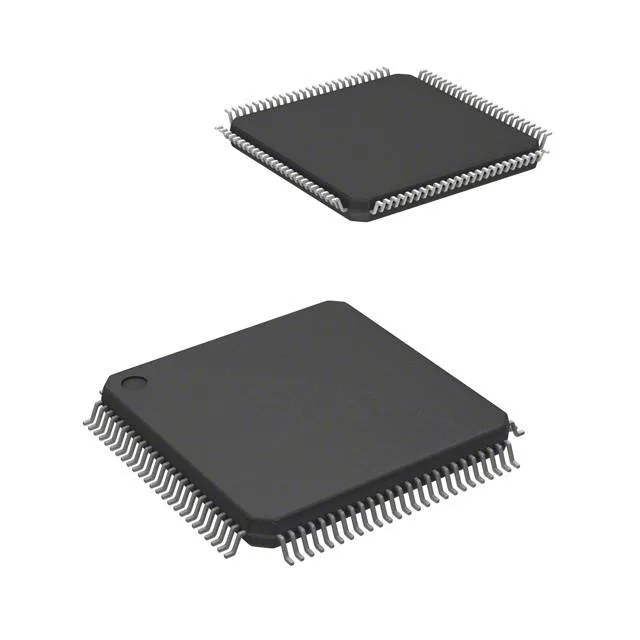
STMicroelectronics STM32F103VET6 — Microcontrollers & Processors (MCU / MPU / DSP)

STM32F103VET6 STM32F1 ARM Cortex-M3 MCU, 72 MHz

MPNSTM32F103VET6
Active

STMicroelectronics STM32F103VET6, STM32F1 series, ARM Cortex-M3 32-bit MCU, 72 MHz, 512 KB Flash, 64K x 8 RAM, 80 I/O, 100-LQFP, -40°C to 85°C, 2V to 3.6V supply.

$10.8300Ref. price · indicative, final on quote
Packaging100-LQFP
RoHSROHS3 Compliant
SeriesSTM32F1
Independent supplier — new & surplus stockAuthenticity-screened · ESD-safe packingListing updated Aug 2026

Specifications

STM32F103VET6 specifications
ParameterValue
SeriesSTM32F1
MountingSurface Mount
Oscillator typeInternal
Program memory typeFLASH
Voltage - supply (Vcc (Vdd))2V ~ 3.6V
Operating temperature-40°C ~ 85°C (TA)
Speed72MHz
PackageTray
RAM size64K x 8
Core size32-Bit Single-Core
PeripheralsDMA, Motor Control PWM, PDR, POR, PVD, PWM, Temp Sensor, WDT
ConnectivityCANbus, I²C, IrDA, LINbus, SPI, UART/USART, USB
Number of i (O)80
Core processorARM® Cortex®-M3
Case100-LQFP
Data convertersA/D 16x12b; D/A 2x12b
Program memory size512KB (512K x 8)

Product details

72 MHz ARM Cortex-M3 with 512 KB Flash — the sweet spot of the STM32F1 line

It packs 80 I/Os in a 100-pin LQFP package, making it a dense I/O option for industrial control, motor drives, and communication gateways that need parallel buses, multiple UARTs, and CAN connectivity without stepping up to a larger BGA.

80 I/Os and 16 ADC channels — analog and digital headroom

With 80 I/Os and 16 multiplexed 12-bit ADC channels plus two 12-bit DACs, this MCU handles multi-sensor acquisition and analog output without external converters. The peripheral set includes DMA, motor-control PWM, a temperature sensor, and watchdog timers — enough for a single-chip motor drive or a fieldbus node with CAN and USB.

Active lifecycle — no end-of-life clock

Frequently asked questions

What is the closest functional second-source for STM32F103VET6?

A functional peer is the STM32L151CBU6A from the STM32L1 series — also an ARM Cortex-M3 core, but clocked at 32 MHz and with lower power consumption. The STM32L151CBU6A has fewer I/Os (37) and a different package (UFQFPN-48), so a board redesign is needed for a drop-in swap. For a pin-compatible replacement within the same STM32F103 family, the STM32F103VET6 shares its footprint with other 100-pin STM32F103 variants, but the Flash and RAM sizes differ.

What is the difference between STM32F103VET6 and STM32F103ZET6?

The STM32F103ZET6 is a 144-pin variant with 144 I/Os and 512 KB Flash, compared to the STM32F103VET6's 100-pin, 80-I/O package. Both run at 72 MHz with the same Cortex-M3 core and peripheral set. The ZET6 is the choice when more GPIO or a larger BGA-compatible footprint is needed; the VET6 fits a smaller board area.