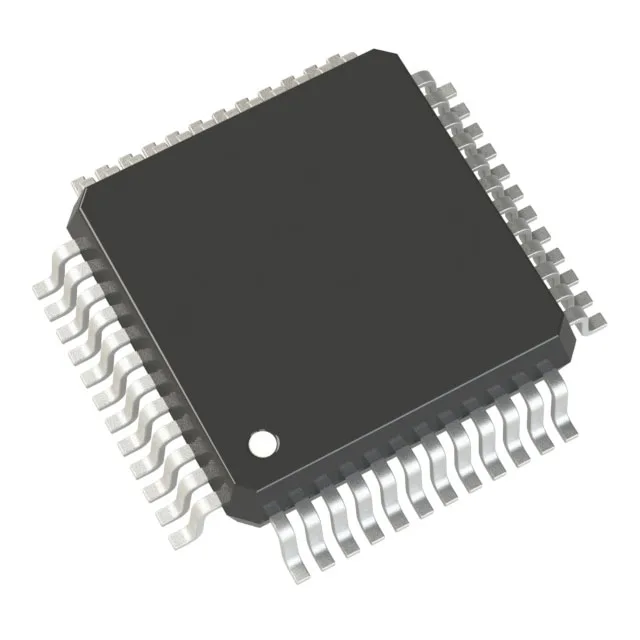
STMicroelectronics STM32F103C6T7A — Microcontrollers & Processors (MCU / MPU / DSP)

STM32F103C6T7A STM32F1 MCU, ARM Cortex-M3, 72 MHz

MPNSTM32F103C6T7A
Active

STMicroelectronics STM32F103C6T7A, STM32F1 series, 32-bit ARM Cortex-M3 MCU, 72 MHz, 32 KB Flash, 10K x 8 RAM, 37 I/O, CAN/USB/I²C/SPI/UART, 48-LQFP, -40°C to 105°C.

$6.6200Ref. price · indicative, final on quote
Packaging48-LQFP
RoHSROHS3 Compliant
SeriesSTM32F1
Independent supplier — new & surplus stockAuthenticity-screened · ESD-safe packingListing updated Aug 2026

Specifications

STM32F103C6T7A specifications
ParameterValue
SeriesSTM32F1
MountingSurface Mount
Oscillator typeInternal
Program memory typeFLASH
Voltage - supply (Vcc (Vdd))2V ~ 3.6V
Operating temperature-40°C ~ 105°C (TA)
Speed72MHz
PackageTray
RAM size10K x 8
Core size32-Bit Single-Core
PeripheralsDMA, Motor Control PWM, PDR, POR, PVD, PWM, Temp Sensor, WDT
ConnectivityCANbus, I²C, IrDA, LINbus, SPI, UART/USART, USB
Number of i (O)37
Core processorARM® Cortex®-M3
Case48-LQFP
Data convertersA/D 10x12b
Program memory size32KB (32K x 8)

Product details

Memory and speed — what the 72 MHz and 32 KB Flash mean for the BOM

The 10 KB SRAM handles moderate data buffers — a 1 KB CAN mailbox, a 2 KB USB descriptor pool, and a few hundred bytes of stack leave room for a small RTOS.

The 105°C ceiling gives thermal margin in a sealed enclosure or near a power stage. The wide supply range (2V to 3.6V) also helps ride through brownout conditions common in industrial 24V systems after a regulator dropout.

Connectivity and peripherals — what is on the bus

The STM32F103C6T7A integrates CAN 2.0B, USB 2.0 full-speed, I²C, SPI, IrDA, and LINbus interfaces. For a 48-pin MCU, the CAN controller is a differentiator — it saves an external CAN transceiver interface chip in automotive or industrial fieldbus designs. The 10-channel 12-bit ADC (with 1 µs conversion time) covers analog inputs like thermistors, potentiometers, or current-sense resistors without an external ADC. The motor-control PWM timer and DMA controller offload the CPU for repetitive data transfers.

Package and footprint — 48-LQFP (7x7 mm)

The exposed pad (if present on the variant) should be stitched to ground with thermal vias for heat sinking — though at 72 MHz and typical currents under 50 mA, thermal dissipation is rarely the limit.

The STM32F1 series has a broad installed base, so second-sourcing options exist within the same package and pinout — the STM32F103C8T6 (64 KB Flash) and STM32F103RBT6 (128 KB Flash) are drop-in upgrades if memory requirements grow.

Frequently asked questions

Can STM32F103C6T7A be replaced with STM32F103C6T6?

If your application does not require the extended temperature, the C6T6 is a functional drop-in. For industrial or outdoor use, stick with the C6T7A.

What is the equivalent to STM32F103C6T7A?

Within the STM32F1 series, the STM32F103C8T6 (64 KB Flash) and STM32F103RBT6 (128 KB Flash) are pin-compatible upgrades in the same 48-LQFP package. For a lower-power alternative, the STM32L151CBU6A runs at 32 MHz but offers similar peripherals and a wider ADC count (16 channels) at the cost of reduced speed.

Is STM32F103C6T7A compatible with STM32F103C8T6?

Yes, the STM32F103C8T6 is pin-compatible and shares the same 48-LQFP footprint. The C8T6 doubles the Flash to 64 KB and the SRAM to 20 KB, so firmware written for the C6T7A will run on the C8T6 without hardware changes, provided the memory map is respected.