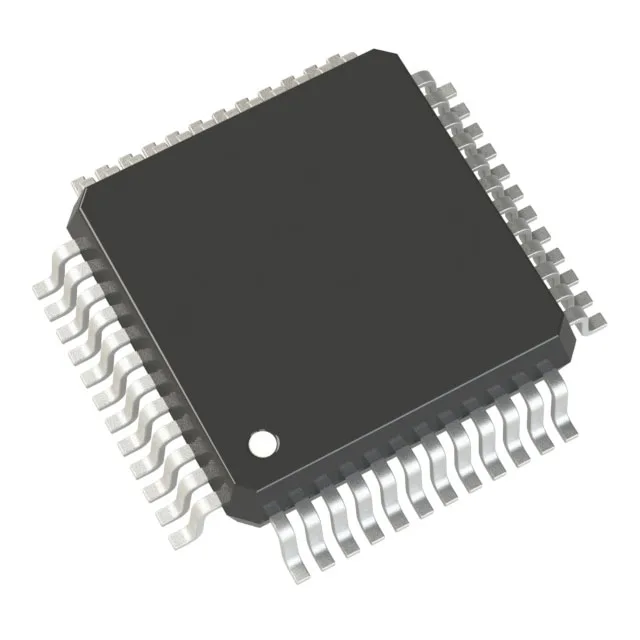
This is the entry density point of the STM32F103 value line — enough code space for a bootloader plus a moderate application, but you'll be budgeting firmware tightly if you plan to run a full RTOS and a protocol stack.
Peripheral set and connectivity — CAN, USB, and the rest
The peripheral list includes a CAN interface, USB full-speed, two I²C channels, two SPI ports, three USARTs (with IrDA and LIN support), and a motor-control PWM timer. There's also a 12-bit ADC with 10 channels, a temperature sensor, a watchdog timer, and a DMA controller. The CAN bus alone makes this part a candidate for industrial node controllers and sensor hubs where a simple UART link won't cut it.
The internal oscillator means you can boot without an external crystal for cost-sensitive builds, though the PLL accuracy will drift with temperature.
The base product number is STM32F103, and the series is the well-established STM32F1.