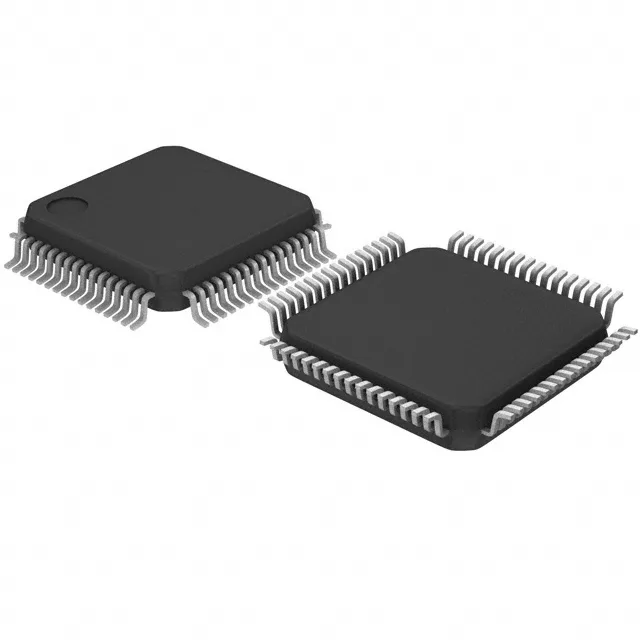
STMicroelectronics STM32F101R8T6TR — Microcontrollers & Processors (MCU / MPU / DSP)

ST STM32F101R8T6TR ARM Cortex-M3 MCU, 36 MHz, 64-LQFP

MPNSTM32F101R8T6TR
Active

STMicroelectronics STM32F1 series, STM32F101R8T6TR, ARM Cortex-M3 32-bit MCU, 36 MHz, 64 KB Flash, 10K x 8 RAM, DMA, I²C/SPI/UART, 51 I/O, 64-LQFP, -40 to 85 °C.

$6.4200Ref. price · indicative, final on quote
Packaging64-LQFP
RoHSROHS3 Compliant
SeriesSTM32F1
Independent supplier — new & surplus stockAuthenticity-screened · ESD-safe packingListing updated Aug 2026

Specifications

STM32F101R8T6TR specifications
ParameterValue
SeriesSTM32F1
MountingSurface Mount
Oscillator typeInternal
Program memory typeFLASH
Voltage - supply (Vcc (Vdd))2V ~ 3.6V
Operating temperature-40°C ~ 85°C (TA)
Speed36MHz
PackageTape & Reel (TR) Cut Tape (CT)
RAM size10K x 8
Core size32-Bit Single-Core
PeripheralsDMA, PDR, POR, PVD, PWM, Temp Sensor, WDT
ConnectivityI²C, IrDA, LINbus, SPI, UART/USART
Number of i (O)51
Core processorARM® Cortex®-M3
Case64-LQFP
Data convertersA/D 16x12b
Program memory size64KB (64K x 8)

Product details

36 MHz ARM Cortex-M3 — the value-line workhorse for control applications

The STM32F101R8T6TR is a 32-bit microcontroller from STMicroelectronics' STM32F1 series, built around an ARM Cortex-M3 core clocked at 36 MHz.

The 36 MHz core speed is the single most important spec distinguishing this part from the STM32F103 sibling, which runs at 72 MHz. If your control loop or protocol stack can close timing at 36 MHz, the STM32F101R8T6TR saves BOM cost without over-spending on a faster core you do not need. The DMA and peripheral set are identical to the STM32F103; the difference is the clock speed and the absence of a second 12-bit ADC channel. For sensor fusion, UART-to-SPI bridging, or PWM generation at moderate switching frequencies, 36 MHz is sufficient — the bus matrix and DMA keep the core from becoming the bottleneck.

The ROHS3 compliance is current.

64 KB Flash and 10 KB SRAM — sizing the firmware budget

64 KB of Flash (64K x 8) and 10 KB of SRAM (10K x 8) define the firmware footprint. This is the entry-level density in the STM32F1 value line; the 128 KB and 256 KB variants share the same pinout, so a board designed for this part can later spin to a higher-density STM32F101 if the firmware grows. The 10 KB SRAM is tight for buffered communication stacks — plan for a simple round-robin or DMA-driven buffer scheme rather than a full RTOS heap.

Frequently asked questions

What is the difference between STM32F101R8T6TR and STM32F103R8T6?

The STM32F103R8T6 runs at 72 MHz and includes two 12-bit ADCs, whereas the STM32F101R8T6TR runs at 36 MHz with a single 12-bit ADC. Both share the same 64 KB Flash, 10 KB SRAM, 64-LQFP package, and peripheral set (DMA, I²C, SPI, UART, etc.). The STM32F101 is the cost-optimized variant — choose it when the application does not need the extra clock speed or the second ADC.

What is the clock speed of STM32F101R8T6TR?

The ARM Cortex-M3 core runs at 36 MHz.