What the 24 MHz core and 128 KB Flash mean for a control-oriented BOM
It is built for cost-sensitive control applications where the processing load is deterministic — sensor polling, PWM generation, UART/I²C/SPI communication, and basic PID loops. The 24 MHz ceiling is deliberate: it keeps the flash-wait-state penalty at zero for most instruction fetches, so interrupt latency stays predictable without a cache. The 8 KB RAM is tight; a lightweight scheduler or bare-metal state machine fits, but a full FreeRTOS heap with multiple large buffers will push the limit.
Industrial temperature coverage and supply flexibility
The wide supply also simplifies brownout management — the internal POR and PVD blocks can trigger a clean reset or an early-warning interrupt before the rail collapses.
Analog integration: 16-channel ADC and dual DAC
The ADC samples at rates adequate for low-speed feedback loops — think motor-current monitoring at a few kHz or temperature readout every millisecond. The dual DAC is useful for generating complementary control voltages or driving an external analog indicator.
80 I/O in a hand-solderable 100-LQFP
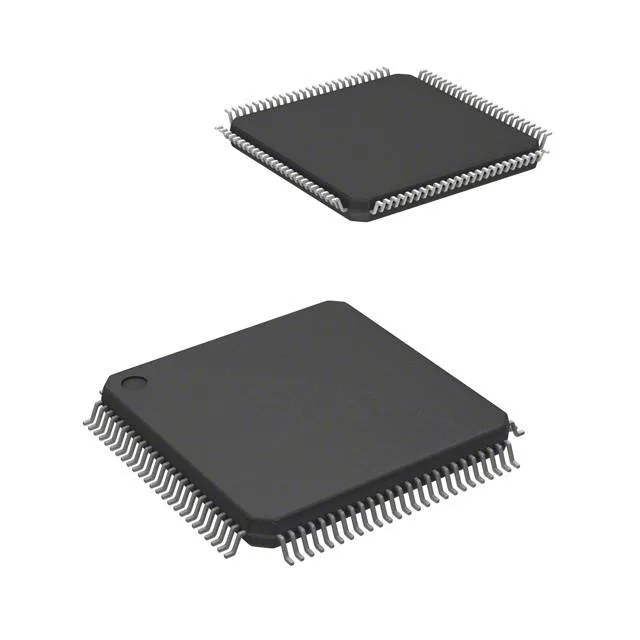
The 100-LQFP (14x14 mm) package exposes 80 general-purpose I/O pins, enough to interface with a parallel LCD, a keypad matrix, multiple SPI/I²C peripherals, and a bank of optocouplers or relays. The QFP footprint is rework-friendly — no BGA, no hidden solder joints — which matters for prototyping, rework labs, and low-volume production where a hot-air station is the primary tool.