What this 48 MHz Cortex-M0 brings to a BOM line
That sub-1.8 V floor is the standout here — it lets this part run from a single lithium cell or a 1.8 V rail without a boost converter, which is unusual for a 48 MHz part in this footprint. Typical applications include appliance control panels, sensor hubs, and consumer AV gear where HDMI-CEC is needed for remote control pass-through.
The 48 MHz core speed is the entry-level sweet spot for the STM32F0 family: fast enough for a UART-to-USB bridge, a simple motor commutation loop, or a CAN gateway, but not overkill for a cost-sensitive BOM. The 128 KB Flash is the mid-density option — enough for a modest firmware stack with a bootloader and a few protocol layers, but you will hit the wall if you try to cram a full RTOS with TCP/IP and a GUI. The 16K x 8 SRAM (16 KB) is tight; watch your stack and DMA buffer allocation, especially if you are using USB with double-buffered endpoints. The 1.65 V minimum supply means this part can stay alive on a battery that has mostly drained, which is a real advantage in portable or backup-power scenarios.
Package and I/O — 100-LQFP with 86 pins to route
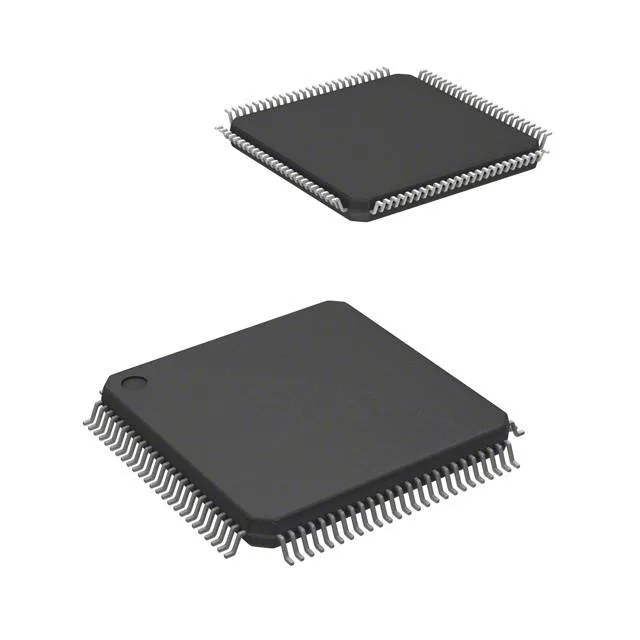
The 100-LQFP (14x14 mm) gives you 86 usable I/O pins — enough to drive a parallel LCD, a keypad matrix, and a few external peripherals without a port expander. No exposed pad here, so thermal dissipation is through the leads only; keep the ambient load under 85°C and you are fine. The surface-mount footprint is the same as other 100-pin LQFP STM32 parts, so a board layout for an STM32F103 or STM32F4 in the same package will fit with a BOM swap.
Peripherals you actually use
The HDMI-CEC block is the niche feature: if your design needs to send or receive CEC commands on an HDMI link, this part handles it without an external translator chip.
The STM32F0 series is a mature, volume-driven line, so supply through independent distribution is steady. If you are dual-sourcing, the STM32L151CBU6A (Cortex-M3, 32 MHz, 1.8 V) is a functional alternative with a different core and lower speed — check your firmware port before substituting.