48 MHz Cortex-M0 with CAN and USB — what fits
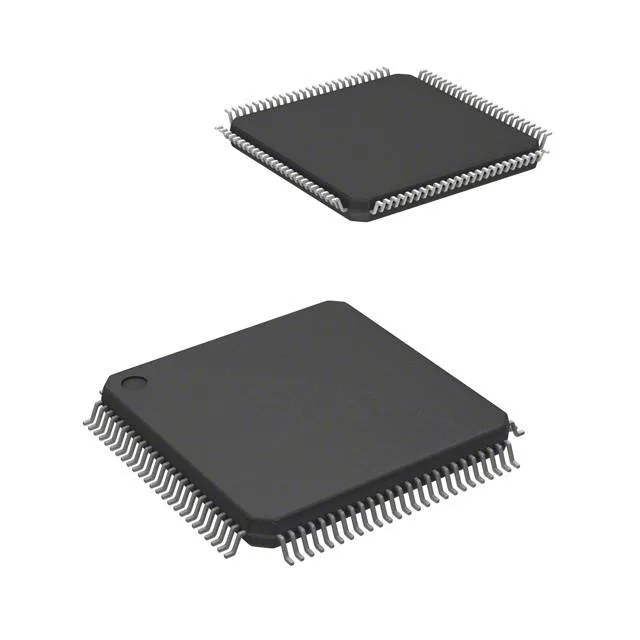
It is built for cost-sensitive control applications that need a hardware CAN interface alongside USB, multiple UART/USART, SPI, and I²C links. The 100-LQFP package gives access to 87 I/O lines, enough for sensor arrays, keypad matrices, or parallel LCD data buses without external GPIO expanders.
Memory budget and peripheral set
64 KB Flash is a comfortable fit for a moderate firmware stack — a USB CDC class driver, a CANopen stack, and a scheduler will leave room for application code. The 16 KB SRAM handles a couple of 1 KB communication buffers and a modest data array; if your application needs larger frame buffers or a real-time OS with multiple task stacks, check the RAM footprint early. The CAN peripheral (compliant with CAN 2.0B) is the standout interface — it makes this MCU a natural fit for industrial automation nodes, building management controllers, or automotive aftermarket modules where a CAN bus is the backbone. USB with full-speed device capability adds a direct PC connection for configuration or data logging without an external UART-to-USB bridge.